


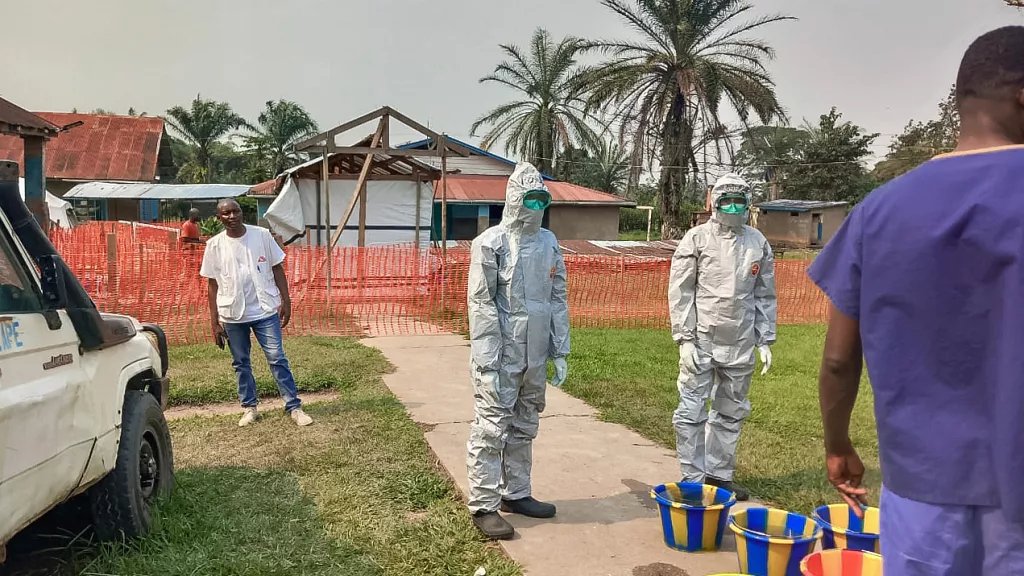
The Democratic Republic of Congo is facing its largest Ebola outbreak on record, with more than 7,000 cases reported.
Authorities say 7,022 infections have been recorded since the outbreak began in May.
The death toll has reached 3,398, while 1,671 people have recovered.

Yet officials say there may be a reason for cautious optimism.
Outbreak may have passed its peak
Government spokesman Patrick Muyaya said the number of new Ebola cases has started to fall.
According to Muyaya, the outbreak peaked during the third week of August.
He said health indicators now point to a decline in infections.
Ten of the 61 health zones affected by the outbreak have reportedly gone at least 21 days without recording a new case.
That could be an important sign for health authorities.
However, officials must continue monitoring the situation before declaring a sustained decline.
Virus reaches another province
The latest development comes with a warning.
Ebola has now been confirmed in South-Ubangi province.
The province is located near the borders with the Central African Republic and the Republic of Congo.
The new detection means the outbreak has reached seven provinces.
This is particularly concerning because the virus has already spread across difficult-to-reach parts of the country.
Conflict makes containment harder
The epidemic started in Ituri province in northeastern DRC.
It then moved into other conflict-affected areas.
Some communities have limited access to healthcare.
Years of armed conflict have also made movement and disease surveillance more difficult.
Health officials must work in areas where insecurity remains a major obstacle.
Schools become a new focus
The return to school has raised additional fears in Ituri.
Ebola infections have been detected in schools following the resumption of classes.
Parents in Bunia have expressed concern about possible transmission among pupils.
School officials have responded with additional health measures.
Students must wash their hands with soap.
Schools are also encouraging pupils to avoid unnecessary physical contact.
Some classrooms are being limited to 30 students.
Ebola remains highly dangerous
Ebola spreads mainly through direct contact with bodily fluids from infected people.
It can cause severe illness and, in serious cases, organ failure and bleeding.
The current outbreak involves the Bundibugyo strain.
There is no approved vaccine or treatment specifically for this strain at present.
Researchers are, however, testing potential vaccines and treatments.
Officials urge continued vigilance
The reported decline in cases offers some hope.
However, the confirmation of Ebola in another province shows that the outbreak is far from over.
Health workers must maintain surveillance across affected communities.
They must also identify contacts quickly and strengthen infection prevention in hospitals and schools.
The coming weeks will be critical.
If the decline continues, authorities could gain greater control over the outbreak.
For now, however, the DRC remains on high alert as it battles one of the deadliest Ebola outbreaks in its history.