


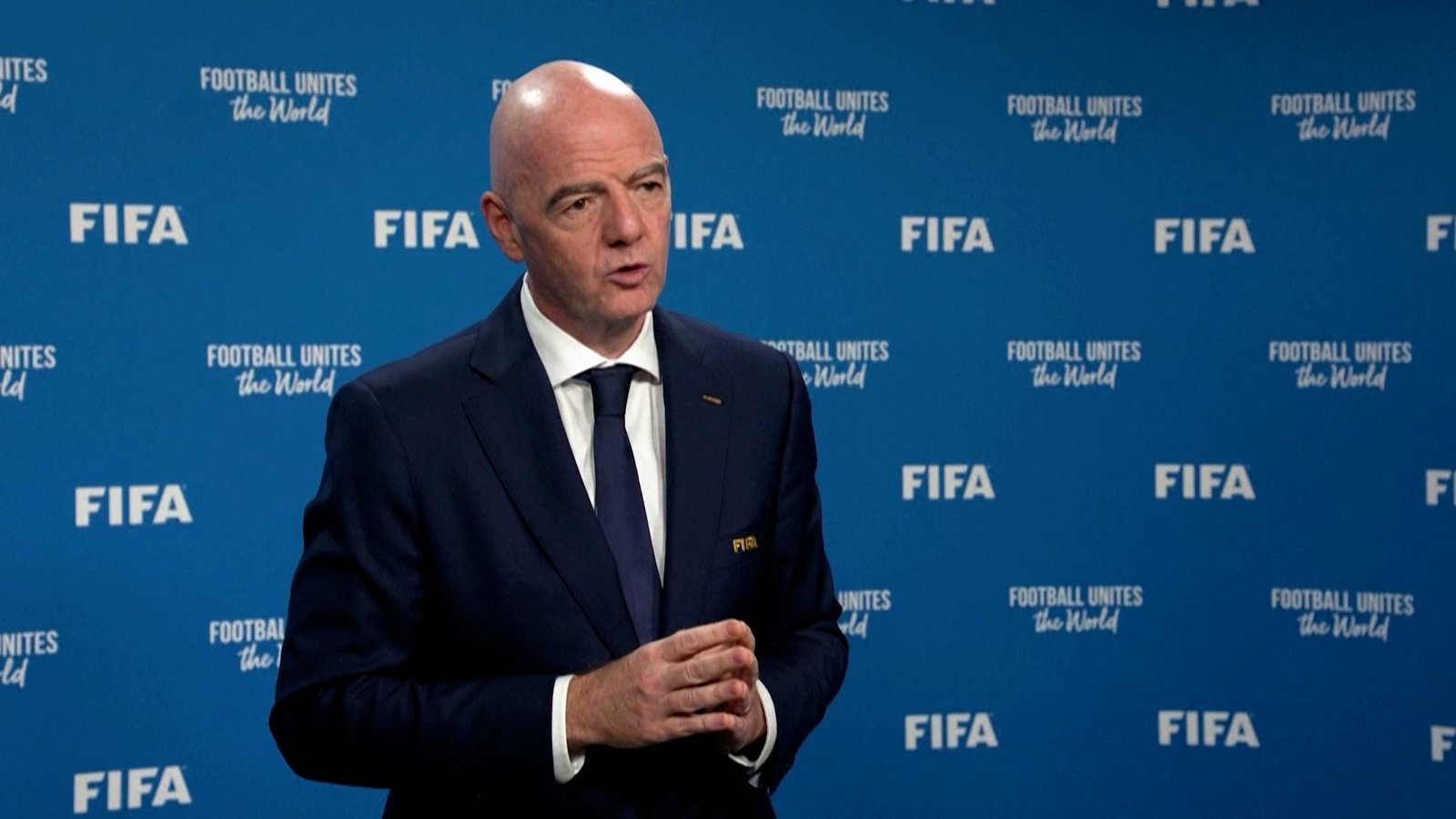
FIFA President Gianni Infantino has apologised to members of the organisation’s Council over the handling of a proposed $4.2 billion investment plan that would have opened parts of FIFA’s commercial operations to private investors.
The apology was delivered after a three-and-a-half-hour meeting in Zurich on October 15, 2026, amid concerns about consultation, transparency and leadership within the global football governing body.
The proposal, known as FIFA Forward Enterprise (FFE), was eventually abandoned following widespread opposition.

Infantino Admits Consultation Mistakes
Infantino acknowledged that FIFA had made mistakes in communicating and consulting Council members about the initiative.
He nevertheless maintained that the project was only a proposal and had not reached the stage of a concluded agreement.
The FIFA president said the initiative was intended to generate additional revenue and increase investment in the organisation’s 211 member associations, without replacing existing funding arrangements.
His apology addressed the process used to present the proposal rather than announcing a new investment agreement.
England and Germany Question the Outcome
Officials representing England and Germany reportedly said the meeting had not adequately resolved their concerns.
Their objections centred on the way the proposal had been handled and whether Council members had received sufficient information and opportunities to contribute before it became public.
The concerns have kept attention on FIFA’s internal decision-making procedures despite the project’s withdrawal.
Inside the FIFA Forward Enterprise Plan
The FFE proposal emerged publicly in July 2026.
Under the reported plan, FIFA would have established a commercial entity responsible for managing rights linked to competitions such as the World Cup.
Private investors would have been offered a minority stake of approximately 20 per cent, with the proposed arrangement valued at around $4.2 billion.
The initiative was presented as a way to unlock further commercial opportunities and increase funding available for football development across FIFA’s member associations.
However, critics questioned the transparency of the proposal and the potential consequences of allowing outside investors to participate in FIFA’s commercial rights structure.
What Happens Next?
The project has been abandoned, but the disagreement has highlighted continuing questions about governance and consultation at FIFA.
The episode also underlines the importance of ensuring that major financial proposals are clearly explained and discussed with relevant decision-makers before they advance.
Infantino has acknowledged mistakes in the communication process, while concerns raised by officials from England and Germany remain part of the wider debate over FIFA’s governance.