

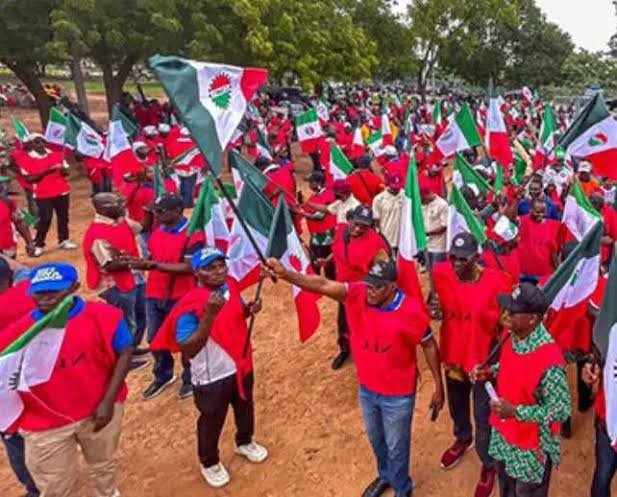
The Nigeria Labour Congress has maintained its two-week ultimatum to the Federal Government, insisting that urgent action is needed to address rising petrol prices, declining workers’ purchasing power and the need for fresh minimum wage negotiations.
NLC President Joe Ajaero reiterated the union’s position in Abuja on Monday, October 19, as tensions continued between organised labour and the government over workers’ welfare and the cost of living.
NLC Demands Petrol Price Relief and New Wage Talks
The labour union issued its ultimatum on October 8, with the two-week period beginning on October 9.

It wants the government to take steps to reduce petrol prices to the level prevailing when the ₦70,000 national minimum wage was signed into law in 2024. It is also demanding that negotiations for a new minimum wage begin before the end of October.
The NLC argues that the current wage has been eroded by rising prices and the depreciation of the naira, leaving many workers struggling to meet essential expenses.
Its additional demands include tax relief, wage awards to cushion the impact of rising living costs, and the implementation of outstanding agreements with health-sector and public-sector workers.
Ajaero Warns Against Waiting for Industrial Action
Ajaero said the government should act proactively instead of waiting for organised labour to resort to strikes or protests.
The NLC has warned that it could take further action if its demands are not addressed within the deadline. The union’s leadership is expected to determine the next steps through its relevant decision-making organs.
The dispute has also extended to the timing of new wage negotiations. Vanguard reported on October 15 that the NLC rejected the government’s position that preparations for a fresh minimum wage review would be premature before June 2027.
FG Emphasises Financial Capacity
The Federal Government has urged stakeholders to consider both workers’ welfare and the country’s financial capacity when making wage decisions.
Secretary to the Government of the Federation George Akume made the point through Permanent Secretary Dr Abubakar Kana at a retreat of the National Salaries, Incomes and Wages Commission in Abuja.
Akume called for a balance between legitimate demands for better remuneration and the resources available to government, warning against industrial disputes that could be avoided through dialogue.
What Happens as the Deadline Approaches?
The disagreement reflects wider pressure on the government to cushion the effects of economic reforms while managing public spending.
The NLC says workers’ incomes are no longer sufficient to cover essential needs, while the government has stressed the importance of considering fiscal realities in wage decisions.
As the ultimatum period approaches its end, attention will focus on whether both sides can reach an agreement on petrol prices, wage negotiations and other outstanding demands before the dispute escalates.
The NLC has not withdrawn its ultimatum, and any further industrial action would depend on decisions by its leadership and relevant organs.