


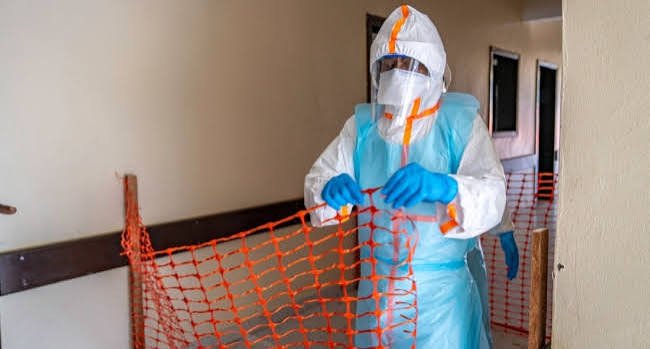
Nigeria is strengthening its Ebola response by planning additional treatment facilities and referral arrangements as the number of contacts linked to the country’s confirmed case rises to 53.
The Federal Government’s latest measures focus on improving isolation capacity, strengthening infection prevention and control, and ensuring that suspected cases can be transferred quickly to appropriate medical facilities.
The plans were outlined in an Ebola situation report issued by the Nigeria Centre for Disease Control and Prevention (NCDC) on October 24, 2026.

The report confirmed one case of Bundibugyo Ebola disease in the Federal Capital Territory and stated that the patient was receiving care in isolation and had improved remarkably.
University of Abuja Teaching Hospital Assessed
The University of Abuja Teaching Hospital has undergone a needs assessment and optimisation exercise to improve its readiness to serve as an Ebola isolation and treatment centre.
The assessment forms part of the government’s efforts to ensure that healthcare facilities can safely manage suspected or confirmed cases.
The authorities are also planning an infection prevention and control assessment at Karu General Hospital in Abuja.
The exercise will determine the hospital’s capacity to accommodate a potential increase in isolation needs and identify areas requiring improvement.
Treatment Centres Planned for States
The government intends to identify and optimise treatment centres in states with designated ports of entry.
These facilities would strengthen the ability of state health authorities to respond to suspected cases detected through airport screening, surveillance or other public health channels.
The NCDC has also identified the establishment of referral mechanisms as a priority.
Under the proposed arrangements, patients suspected of having Ebola should be transferred from the point of detection to designated treatment centres through appropriate procedures.
Such coordination is intended to reduce delays while protecting healthcare workers, patients and the public from possible exposure.
Contact Tracing Reaches 53 People
The NCDC has identified 53 primary contacts linked to the confirmed case, up from the initial 44 reported after the infection was confirmed.
The group includes healthcare workers and people who may have had contact with the patient during her medical visits, as well as members of her household and domestic staff.
Health officials are categorising the contacts according to their exposure and conducting follow-up monitoring.
The agency is also working to identify secondary contacts who may have been exposed through those already under observation.
The NCDC’s October 24 situation report recorded no positive tests among the identified contacts and no deaths associated with Nigeria’s confirmed case. A suspected Ebola case reported in Rivers State also tested negative.
Authorities have emphasised that contact identification is a precautionary public health measure and does not mean that those being monitored have contracted the virus.
Wider Preparedness Measures Underway
Beyond treatment facilities and contact tracing, Nigeria is strengthening surveillance at ports of entry, improving infection prevention and control practices, and building the capacity of healthcare personnel.
The national incident management system has been activated to coordinate activities across the response, while protective equipment and other essential supplies are being incorporated into preparedness arrangements.
The government is also emphasising public communication to counter misinformation and encourage cooperation with health authorities.
Public Urged to Follow Verified Health Advice
The measures are intended to improve Nigeria’s readiness to respond quickly if additional infections are identified.
Health authorities continue to monitor the confirmed case and contacts while investigations into potential exposure continue.
Residents are encouraged to seek information from official health agencies and cooperate with public health teams if contacted for monitoring.
Nigeria’s response is focused on containing the confirmed case, preventing further transmission and ensuring that health facilities are equipped to respond effectively to any suspected infections.