

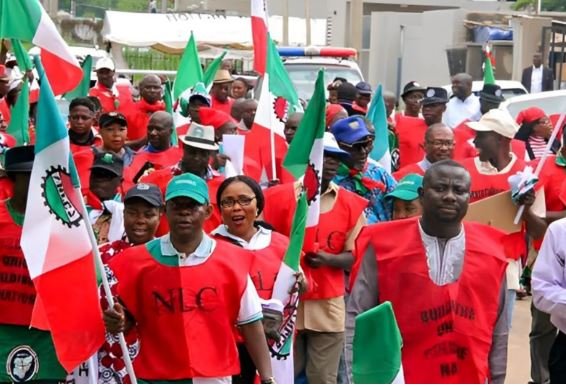
The Federal Government is expected to meet with organised labour on Tuesday, October 27, in a fresh attempt to resolve disputes over petrol prices, minimum wage negotiations and other outstanding workers’ welfare demands.
The negotiations come after an earlier meeting ended without concrete commitments, leaving the Nigeria Labour Congress (NLC) warning that its leadership could consider further action if the government fails to make meaningful progress.
The outcome could influence whether the dispute is resolved through dialogue or escalates into a wider industrial confrontation.

NLC Wants Answers to Outstanding Demands
The NLC has said it expects the government to arrive with specific proposals addressing the demands already presented by labour.
Assistant Secretary-General Chris Onyeka told The Punch that the union did not want the meeting to become another round of discussions without substantive answers.
The demands include reducing petrol prices to their 2024 levels, implementing agreed tax relief measures, providing immediate wage awards and beginning negotiations for a new national minimum wage.
Labour is also seeking the resolution of outstanding disputes affecting health workers and other public-sector employees.
These include issues raised by the Joint Health Sector Unions and the Joint Public Service Negotiating Council concerning allowances, wage awards and hazard payments.
Disagreement Over the Timing of a New Minimum Wage
The timing of negotiations for a new national minimum wage remains a major issue.
The current statutory minimum wage is ₦70,000 monthly, following the increase approved in 2024.
The NLC wants the process of negotiating a new wage to begin before the government’s proposed June 2027 review. It argues that inflation and rising household expenses have weakened the purchasing power of workers.
The government has previously maintained that June 2027 is the appropriate review point under the applicable timetable.
The negotiations could help clarify whether the parties can agree on when preparations for a new wage review should begin.
Petrol Prices at the Centre of Labour’s Concerns
Labour is demanding a reduction in petrol prices to the levels prevailing when the ₦70,000 minimum wage was signed into law in 2024.
The union argues that expensive fuel increases transportation costs and contributes to higher prices for food, housing and other essential goods.
It is also seeking tax relief and immediate wage awards to help workers cope with rising living expenses.
The government will need to respond to these demands while considering the wider economic implications of any proposed measures.
Pensioners Call for ₦75,000 in Outstanding Payments
The Federal Parastatals and Private Sector Pensioners Association of Nigeria has separately called for payment of three months of outstanding fuel-subsidy palliatives to eligible pensioners.
The amount being sought is ₦75,000 per eligible beneficiary, based on a monthly payment of ₦25,000 over three months.
The association has also urged the government to improve pensioners’ access to healthcare benefits.
The request adds to wider calls for government intervention to ease the financial pressure on workers and retirees.
Nationwide Action Remains a Possibility
The labour dispute follows the failure of the previous meeting to secure concrete commitments. The NLC has said its relevant leadership organs will determine the next course of action if Tuesday’s discussions do not produce meaningful progress.
The possibility of industrial action therefore remains, but a final decision should not be assumed before the outcome of the negotiations and any subsequent announcement by labour.
For now, workers and employers will be watching to see whether the government presents proposals capable of resolving the dispute.
Status: Negotiations are scheduled for October 27. No final agreement or confirmed nationwide strike decision had been reported ahead of the meeting.