


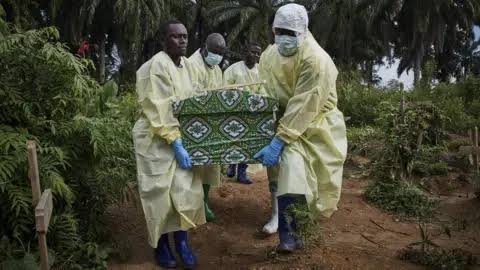
The Democratic Republic of Congo is battling an escalating Ebola emergency, with more than 11,000 confirmed infections and over 5,300 deaths recorded in the country’s latest and most severe outbreak.
According to figures released Wednesday by the National Institute of Public Health, 11,042 people have been infected, while 5,387 have died. The authorities also reported approximately 2,990 recoveries.
The scale of the outbreak has raised serious concerns, particularly as armed violence in eastern Congo continues to interfere with medical operations.

Eight Provinces Affected by the Outbreak
The outbreak, officially announced in May, is the 17th Ebola outbreak in the DRC’s history. Experts believe the disease may have started spreading before it was formally declared.
It was first detected in northeastern Ituri province and has since reached seven additional provinces. Ituri and North Kivu remain the main centres of infection.
The Bundibugyo species responsible for the outbreak presents a particular challenge because there is currently no approved vaccine or specific treatment for it.
The World Health Organization is investigating whether the Ervebo vaccine, developed and approved for the more common Zaire strain, could offer some protection. A full human trial was announced for the DRC last month.
Attacks and Insecurity Disrupt Ebola Operations
Health workers are facing difficult conditions in areas affected by armed groups and recurring violence.
In Lolwa, Ituri province, a health centre treating Ebola patients was reportedly set on fire by youths on Sunday, according to health authorities.
The United Nations also said clashes between local militias temporarily forced the suspension of health response activities around Fataki.
Further attacks attributed by local and security sources to the Islamic State-affiliated Allied Democratic Forces have reportedly occurred in parts of Ituri, Haut-Uele and North Kivu.
The insecurity has increased the risks facing medical personnel and made it harder to reach affected communities with testing, treatment and other essential services.
A Major Public Health Threat for Africa
Ebola is transmitted through direct contact with the bodily fluids of infected people and can cause severe haemorrhagic fever.
More than 15,000 people have died from Ebola across Africa over the past 50 years.
The DRC’s previous largest outbreak, between 2018 and 2020, recorded about 3,500 cases and nearly 2,300 deaths.
The latest crisis has also attracted regional attention, with cases reported in Uganda, Kenya and Nigeria, according to the supplied report.
With infections continuing to rise, health authorities face the difficult task of containing the virus while dealing with armed conflict, damaged health infrastructure and threats to frontline workers.