

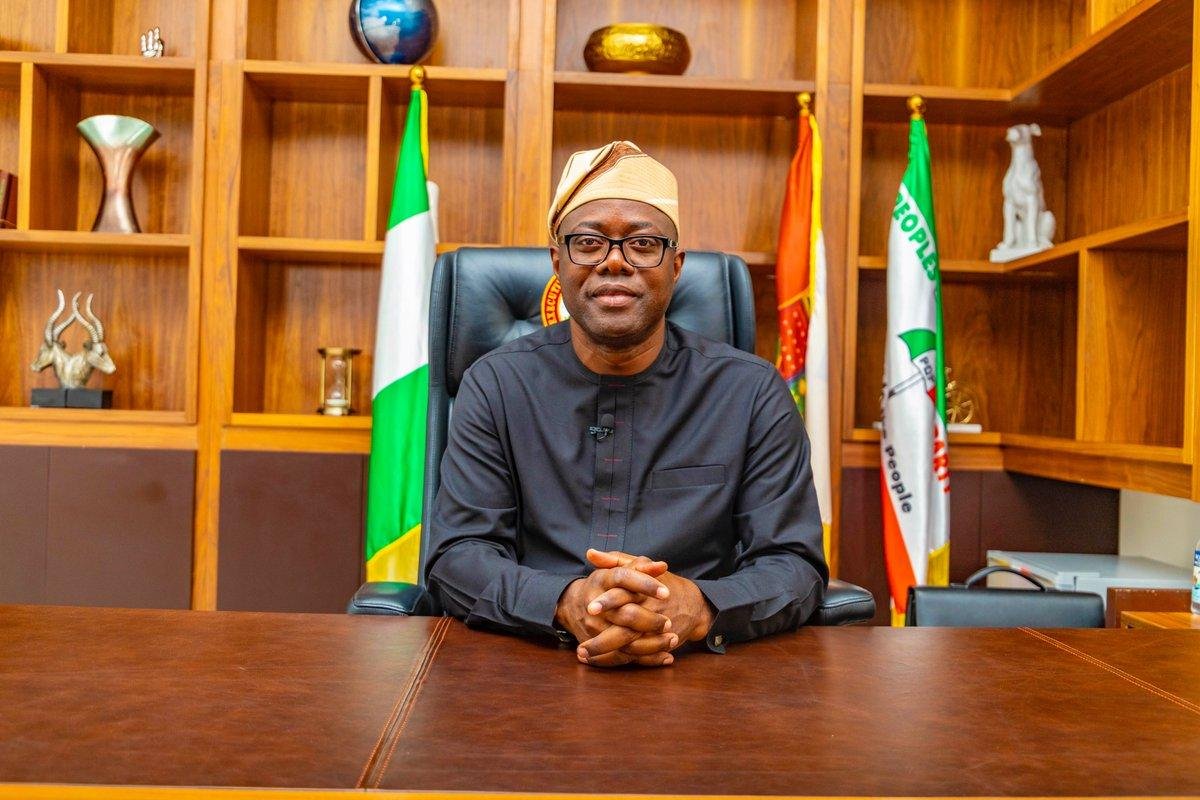
With Nigeria’s electricity challenges becoming a major talking point in the emerging 2027 political contest, Governor Seyi Makinde’s presidential campaign organisation has opened a fresh debate over President Bola Tinubu’s promises to improve power supply.
The organisation has taken issue with former Minister of Power, Works and Housing, Babatunde Fashola, following his recent television appearance in which he defended the President’s electricity policies.
Fashola reportedly argued that Tinubu did not make an unconditional promise to deliver uninterrupted electricity to Nigerians.

But the Allied Peoples Movement (APM), which is presenting Makinde as its presidential candidate for the 2027 election, has rejected that position.
In a statement issued by its Director of Strategic Communications, Richard Ihediwa, the campaign organisation argued that Nigerians should judge the administration by its campaign commitments and the actual condition of electricity supply across the country.
The Promise That Has Returned To The Political Debate
The disagreement centres on remarks Tinubu made during the 2023 presidential campaign.
At the time, the President assured Nigerians that electricity supply would be treated as a priority and that consumers would no longer have to pay estimated electricity bills.
The campaign organisation quoted Tinubu as saying:
“Whichever way, by all means necessary, you must have electricity. And you will not pay for estimated bill anymore. A promise made, will be a promise kept.”
The Makinde campaign said those remarks created expectations among Nigerians who were looking forward to more reliable electricity and an end to questionable estimated bills.
It questioned what the administration had achieved since taking office in May 2023.
Metering Gap Raises Fresh Questions
One of the major issues raised by the campaign organisation is the continued absence of electricity meters for millions of Nigerian consumers.
The group cited NERC figures indicating that approximately 4.70 million electricity customers were still without meters and remained exposed to estimated billing.
It argued that this situation contradicts the commitment made during the 2023 election campaign.
The organisation also drew attention to the country’s electricity access deficit, claiming that approximately 86.8 million Nigerians still lacked access to public electricity connections.
For the campaign group, these figures demonstrate the scale of the challenge facing the power sector and the need for stronger implementation of government policies.
Electricity Reforms Must Produce Results, Says Campaign
Beyond metering, the organisation questioned whether the Federal Government’s electricity reforms were delivering meaningful improvements.
It referred to NERC’s May 2025 report concerning the performance improvement plans of the Transmission Company of Nigeria and the Nigerian Independent System Operator.
According to the campaign’s interpretation of the report, only ₦1.7 billion was disbursed for eight projects between January 2024 and January 2025.
The group also alleged that just 45 per cent of the approved 2024 funding had reached the designated account.
It identified procurement delays, funding challenges and project prioritisation as major obstacles to progress.
The campaign maintained that electricity reforms should be measured by the quality and reliability of power available to households, businesses and industries.
It also criticised the reported decision to move the Presidential Villa towards a solar-powered electricity system, arguing that government facilities should not become an excuse for neglecting the wider national grid.
Why Makinde’s Campaign Is Promoting RESET Nigeria
The controversy has also provided the Makinde campaign organisation with an opportunity to present its proposed electricity strategy to Nigerians.
The group said Makinde’s RESET Nigeria Agenda would focus on improving electricity reliability and stability within three years.
According to the organisation, the proposal is built around coordinated planning, adequate financing, project execution and accountability throughout the electricity value chain.
Rather than concentrating exclusively on announcing new projects, the campaign says its priority would be ensuring that approved electricity projects are completed and deliver results.
The organisation also pointed to Makinde’s background as an electrical engineer as an advantage in addressing the country’s power sector challenges.
2027 Election Debate Begins To Take Shape
The exchange between Makinde’s campaign organisation and Fashola reflects the growing importance of electricity supply in Nigeria’s political conversation ahead of the 2027 general election.
For millions of households and businesses, unreliable electricity and estimated billing remain major concerns.
The Tinubu administration has continued to pursue electricity sector reforms, while opposition figures are demanding more visible results from those policies.
The central question remains whether the reforms will translate into dependable electricity, improved metering and better service delivery for ordinary Nigerians.
As the 2027 election approaches, the power sector is likely to remain one of the major issues through which political parties and presidential candidates seek to convince voters.