


A landmark decision by the International Court of Justice has placed Myanmar at the centre of a major international legal ruling after judges found the country responsible for committing genocide against its Rohingya minority.
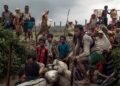
The judgment relates to the Myanmar military’s 2017 operations in Rakhine State, which triggered a humanitarian crisis and forced hundreds of thousands of Rohingya to flee their homes.
The ruling followed legal proceedings initiated by The Gambia in 2019, accusing Myanmar of violating the United Nations Genocide Convention through systematic violence against the minority population.

In its decision, the court examined evidence of killings, sexual violence, attacks on civilians and other abuses committed during the military campaign.
Judge Yuji Iwasawa, while summarising the court’s findings, stated that the evidence supported a reasonable inference that Myanmar’s security forces had acted with genocidal intent.
The judges concluded that the conduct demonstrated an intention to destroy a substantial part of the Rohingya community.
The 2017 crackdown had devastating consequences. Thousands of people were killed, while more than 700,000 Rohingya escaped to neighbouring Bangladesh in search of safety.
Many displaced families have continued to live in refugee camps, facing difficult living conditions and uncertainty over their future.
Myanmar had denied the genocide allegations throughout the proceedings, arguing that its military operations were directed against armed groups responsible for attacks on security forces.
The ICJ’s judgment now establishes Myanmar’s responsibility under the Genocide Convention, making it a significant development in international law and the global campaign for accountability over mass atrocities.
Beyond the legal implications, the decision has renewed attention on the future of the Rohingya people, including their safety, citizenship rights, protection and possible return to their homeland.
The international community will now be watching how Myanmar responds to the judgment and what practical measures will follow to address the suffering of the affected population.