

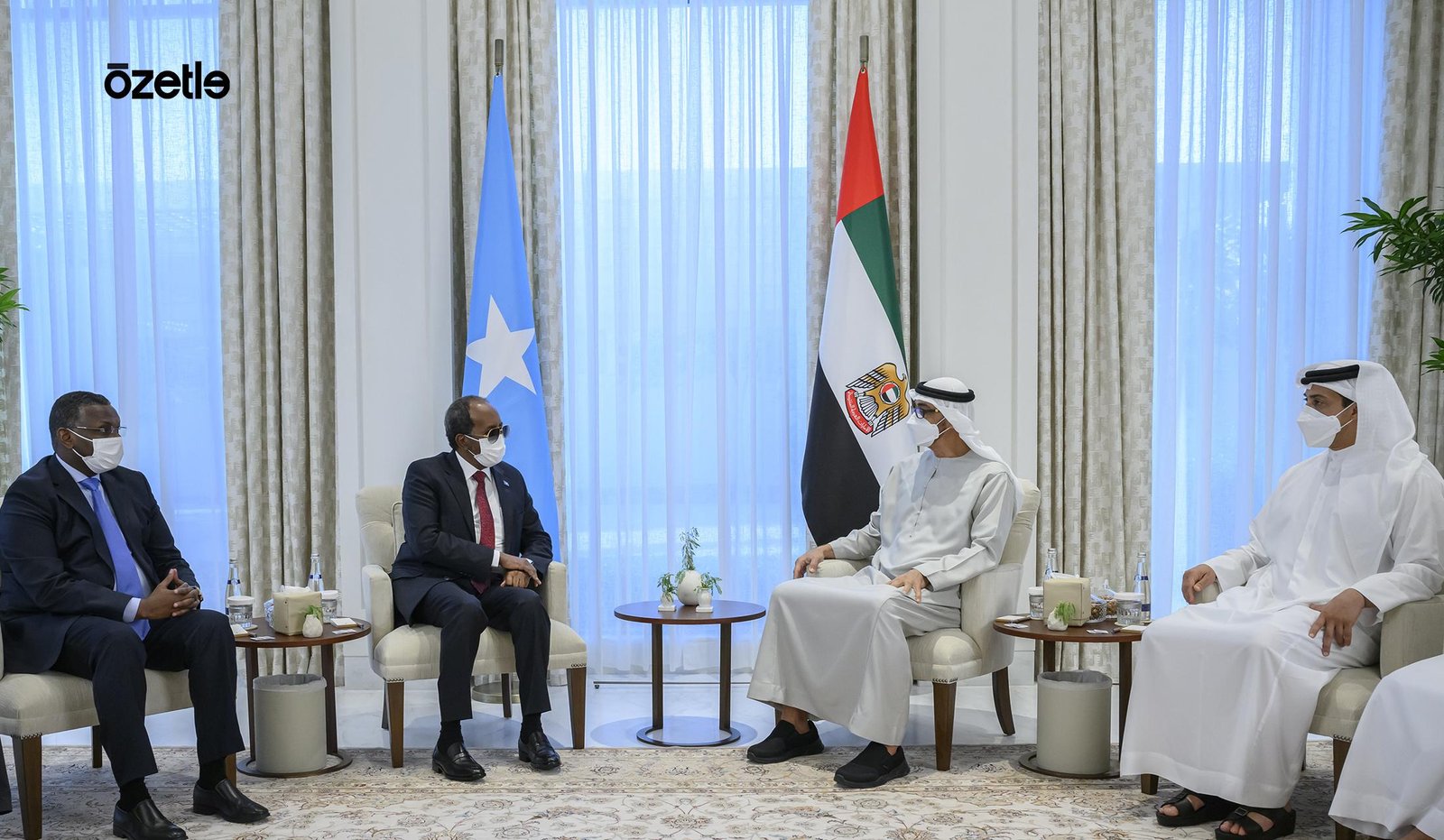
Somalia’s diplomatic relationship with the United Arab Emirates has come under renewed strain after hundreds of residents in Mogadishu took to the streets to support the government’s decision to remove the UAE ambassador from the country.
The demonstration on Thursday followed a serious diplomatic confrontation between President Hassan Sheikh Mohamud’s administration and the UAE over allegations concerning Somalia’s sovereignty and the activities of armed groups outside federal government control.
The Somali government has accused Abu Dhabi of maintaining relationships that undermine the authority of the federal administration.

In response, Mogadishu ordered the UAE ambassador to leave within 72 hours and recalled its own diplomatic representative from the Emirates.
Public Demonstrations Reflect Growing Diplomatic Tensions
Residents who participated in the demonstration said their presence was intended to show support for Somalia’s government and national unity.
Protester Mohamed Ahmed said he wanted to express his opposition to what he viewed as unacceptable conduct towards Somalia.
Maryama Abdirahman also expressed support for the government’s position, describing the demonstration as an opportunity for Somalis to stand together behind their country’s leadership.
The gatherings highlight the domestic political dimension of a diplomatic disagreement that has continued to attract attention across the Horn of Africa.
What Triggered The Disagreement?
The dispute has its roots in disagreements over the UAE’s activities and agreements with different Somali authorities.
Somalia’s federal government announced in January that it was cancelling existing arrangements with the UAE covering ports, government institutions, security and defence cooperation.
However, the decision was challenged by authorities in Somaliland, Puntland and Jubbaland, which rejected Mogadishu’s position on agreements involving their territories.
The issue has exposed continuing disagreements over the balance of authority between Somalia’s federal administration and regional political authorities.
The UAE has maintained commercial and diplomatic relationships across these territories, including involvement in port development and other business activities.
Abu Dhabi Responds To Mogadishu’s Position
Anwar Gargash, an adviser to the UAE president, responded to the latest developments through a post on X.
He criticised President Mohamud, accusing him of allowing personal political calculations to influence decisions affecting Somalia’s national interests.
The exchange illustrates the increasingly strained relationship between the two countries.
The UAE has previously provided financial assistance and military training support to Somalia, alongside investments in commercial projects.
However, Abu Dhabi has repeatedly denied allegations that it interferes in Somalia’s internal political affairs.
United Nations Mission Ends Amid Political Disagreements
The diplomatic confrontation is unfolding at a time when Somalia is facing several domestic political challenges.
The United Nations recently brought its long-running political mission in the country to an end after more than 30 years of supporting negotiations and political dialogue.
The development comes amid continuing disagreements over the country’s electoral arrangements, with no agreed replacement mediator identified in the supplied report.
Earlier this year, tensions over the political process reportedly resulted in armed clashes in Mogadishu.
These developments have increased concerns about the country’s ability to maintain political stability while addressing competing interests among federal and regional authorities.
Court Ruling Raises Questions Over Presidential Tenure
Another significant development involves a recent ruling by Somalia’s Supreme Court.
The court reportedly determined that President Hassan Sheikh Mohamud’s tenure had expired and directed that elections should be conducted within 90 days.
The decision adds to the political uncertainty surrounding the country’s leadership and electoral timetable.
Somalia is therefore confronting several interconnected challenges, including diplomatic tensions with the UAE, disagreements over federal authority, electoral disputes and wider security concerns.
Regional Implications Of The Somalia-UAE Dispute
The disagreement between Mogadishu and Abu Dhabi has implications beyond their bilateral relationship.
Somalia occupies a strategically important position in the Horn of Africa, with access to major maritime routes and commercial connections across the Gulf of Aden and the wider Indian Ocean.
Relations with regional partners, particularly those involved in port development, security cooperation and trade, remain important to the country’s economic and diplomatic interests.
The latest diplomatic measures raise questions about the future of UAE-linked projects and security arrangements in Somalia.
For now, the attention remains on how both governments will manage the dispute and whether diplomatic engagement can prevent further deterioration in relations.