

The Federal Government has defended its decision to obtain external loans, arguing that the funds are being channelled into infrastructure projects and other investments capable of delivering long-term economic benefits.
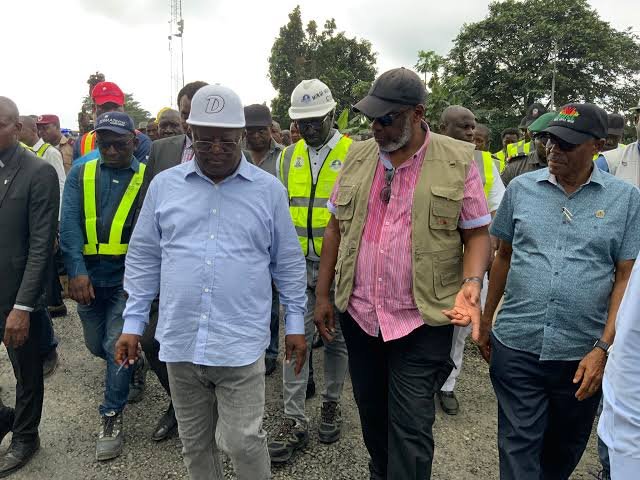
Minister of Works David Umahi gave the explanation during an inspection of bridges on the Lagos-Calabar Coastal Highway on Sunday, November 22, 2026.
He said the coastal highway represents one of the major infrastructure investments being undertaken by President Bola Tinubu’s administration, adding that the government is also exploring commercial opportunities that could generate revenue from the project.

Umahi maintained that the borrowing debate should also consider the infrastructure being developed with the funds and the economic opportunities expected to emerge from such investments.
During the inspection, the minister expressed satisfaction with the progress of construction, particularly the completed sections of the coastal highway.
He disclosed that the first section had been completed approximately six months ago, while another section measuring about 53 kilometres had also reached completion.
The minister listed solar streetlights, underground drainage facilities and pedestrian walkways among the infrastructure features incorporated into the project.
He described the construction pace as exceptional, noting that more than 200 kilometres of road infrastructure had been delivered within about two and a half years.
Umahi further expressed confidence that completing the coastal route from Lagos to Calabar would make travelling easier while improving connectivity between communities and commercial centres.
Rental Housing, Tourism And Industrial Facilities Under Consideration
The Works Minister also revealed that the Federal Government was looking beyond the immediate transportation benefits of the coastal highway.
According to him, the government has received investment interest from individuals and businesses seeking opportunities to generate returns from the road project.
Some of the proposals being considered include CCTV installations, rental housing developments, tourism facilities, industrial sites and other commercial infrastructure.
Umahi explained that the government was examining these proposals with the intention of developing a commercially sustainable model that would generate income for Nigeria.
He stressed that the coastal highway was expected to serve as more than a transportation corridor, with the potential to support tourism, business activities and industrial growth.
President Seeks Legislative Approval For $7.71 Billion Loan
Meanwhile, President Bola Tinubu has requested legislative authorisation to access $7.71 billion in external financing, estimated at ₦10.79 trillion.
The proposed borrowing forms part of the financing provisions contained in the 2026 Appropriation Act.
In a letter transmitted to the Speaker of the House of Representatives, Tajudeen Abbas, the President explained that the funds would support the financing of the Federal Government’s budget deficit and projects in strategic sectors.
The proposed areas of investment include defence, transportation, agriculture, electricity, education and healthcare.
Eurobond issuance is expected to feature prominently among the financing options being considered by the Federal Government.
The proposal places renewed attention on the Tinubu administration’s infrastructure agenda and its approach to funding major national projects through external borrowing.
As the government pursues its development plans, the ability to complete projects on schedule, attract private investment and generate sustainable revenue will remain important measures of the success of its borrowing strategy.