


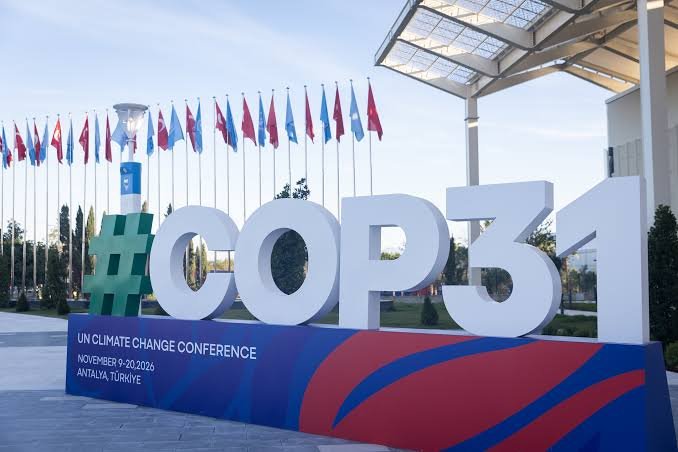
The future of fossil fuels has become the central obstacle to reaching a new global climate agreement at the COP31 summit in Antalya, Turkey, where negotiations have continued beyond the scheduled closing deadline.
Countries remain sharply divided over whether the final agreement should contain an explicit commitment to reduce the world’s reliance on coal, oil and gas.
The disagreement has pushed the summit into additional negotiating sessions, with delegates facing mounting pressure to reach a compromise before the talks break down.

A third draft agreement was circulated in the early hours of Sunday, giving participating countries until 6:00 a.m. local time to submit objections ahead of a 9:00 a.m. meeting scheduled to consider the document.
Draft Agreement Sparks International Disagreement
The controversy developed after an earlier draft called for an accelerated transition away from fossil fuels.
However, a revised text released on Thursday removed references to coal, oil and gas, prompting objections from countries that wanted stronger language on the issue.
The removal triggered threats of a walkout and contributed to the failure to conclude negotiations by the original Friday deadline.
Countries including Panama, Solomon Islands, Côte d’Ivoire and members of the European Union have pushed for fossil fuel commitments to be restored.
Saudi Arabia and other fossil fuel-producing countries have resisted the proposal, leaving negotiators struggling to find wording acceptable to all sides.
European Union and Saudi Arabia Enter Compromise Discussions
Saturday’s negotiations included efforts to bring the European Union and Saudi Arabia together to find common ground.
The two sides have held differing positions on how the international community should address fossil fuel consumption in future climate policy.
COP31 President Murat Kurum, who is also Turkey’s Environment Minister, told delegates in the early hours of Sunday that he believed concerns raised during the negotiations had been addressed.
He encouraged countries to study the latest draft, saying the discussions were closer to an agreement than before.
However, the final outcome remained dependent on whether all participating countries could accept the proposed text.
Pacific Island Nations Warn Against Ignoring Fossil Fuels
For countries facing serious climate-related risks, the omission of fossil fuels from the agreement is a major concern.
Panama’s Environment Minister, Juan Carlos Navarro, strongly criticised the possibility of approving a climate decision without mentioning fossil fuels.
Tuvalu’s Climate Minister, Maina Talia, also described the issue as a non-negotiable position for his country.
He argued that fossil fuel use is directly connected to the underlying causes of the climate crisis.
The concerns are particularly significant for vulnerable island nations, which face serious risks from rising sea levels and other climate-related threats.
What Happens If COP31 Fails to Reach a Deal?
The UN climate negotiation process requires consensus for major decisions to be adopted.
If countries cannot agree on the final text, the summit could close without a new agreement and negotiations may have to resume next year.
That would be an unusual development in the history of the annual COP meetings, which began in 1995. According to the supplied report, such an outcome has happened only once before.
The extended discussions have also created logistical difficulties, with some negotiating teams having to rearrange planned Sunday flights as they wait for a possible breakthrough.
The central question remains whether countries can agree on a common position that addresses fossil fuel dependence while securing support from both major producers and nations demanding stronger climate commitments.
The outcome of COP31 will be closely watched as governments assess the international community’s willingness to agree on further action against global warming.