


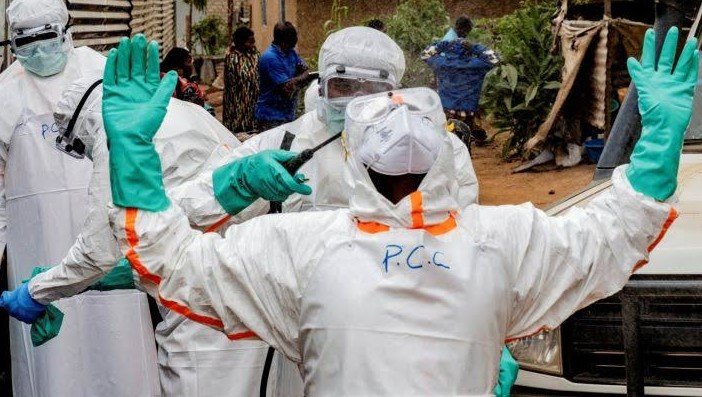
Health and frontline workers in the Democratic Republic of Congo are receiving the Ervebo vaccine as part of the response to the country’s deadly Bundibugyo virus outbreak.
The latest vaccination effort is focused on affected areas of Ituri province, including Bunia.
Health workers have been placed among the priority groups because they face a high level of exposure while caring for patients.

Why Ervebo Is Being Used
Ervebo is the only licensed and WHO-prequalified vaccine specifically available for Ebola virus disease caused by the Ebola virus species, formerly known as Zaire ebolavirus.
It is not a licensed vaccine for Bundibugyo virus disease.
Scientists are studying whether Ervebo can provide some protection against the virus responsible for the current outbreak.
WHO has stressed that the evidence is still insufficient to confirm protection in humans.
70,000 Doses Allocated
The DRC received an initial allocation of 70,000 Ervebo doses from the global Ebola vaccine stockpile in August.
According to WHO, 50,000 doses were intended for healthcare and frontline workers.
Another 20,000 doses were allocated for a clinical trial designed to determine whether the vaccine can protect against Bundibugyo virus.
The approach allows health authorities to protect workers while researchers collect evidence about the vaccine’s possible role against the virus.
Outbreak Continues Across Several Provinces
The Bundibugyo outbreak has affected multiple provinces in the DRC.
WHO reported 6,757 confirmed cases and 3,267 deaths in the country as of September 7, with Ituri remaining the main centre of transmission.
The virus has also been detected in other parts of the country, increasing the pressure on health authorities and response teams.
Population movements and insecurity have made efforts to contain the outbreak more difficult.
Research Continues
There is currently no licensed vaccine specifically for Bundibugyo virus disease.
WHO has recommended that Ervebo be used against the virus only within research protocols while scientists work to establish whether it offers meaningful protection.
Researchers are also developing vaccine candidates specifically designed for Bundibugyo virus.
For now, health authorities continue to rely on vaccination research alongside case detection, laboratory testing, clinical care, infection prevention and community engagement.