

The Federal Government and state authorities have strengthened surveillance and emergency preparedness following Nigeria’s confirmation of an imported case of Ebola Bundibugyo virus disease in Abuja.
The Nigeria Centre for Disease Control and Prevention (NCDC) reported on Wednesday that the patient, described by officials as a diplomat, had developed multi-organ failure. The patient’s identity and nationality were not disclosed at the briefing.
Olajumoke Babatunde, the NCDC’s Director of Public Health Laboratory Service, said molecular tests confirmed the Bundibugyo strain.

However, a Reuters report published on October 22 described the patient’s clinical condition as improving, in contrast to the deterioration reported by NCDC officials on Wednesday. The patient’s current status therefore requires clarification through an updated statement from health authorities.
Imported Case Confirmed in Abuja
The Federal Ministry of Health and Social Welfare announced on October 20 that laboratory tests had confirmed Ebola Bundibugyo virus disease in a woman who had recently travelled to Nigeria from Uganda.
The WHO reported that her symptoms began on October 7 and that she sought treatment at a private health facility in Abuja on October 11. Laboratory confirmation followed on October 20.
The patient was placed in isolation and received medical care, while investigations continued to determine the likely source of infection and establish her travel and exposure history.
The Bundibugyo strain is associated with the ongoing Ebola outbreak in the Democratic Republic of the Congo. The confirmation of a case in Nigeria has prompted authorities to strengthen surveillance and contact tracing to reduce the risk of further transmission.
Authorities Trace 44 Contacts
Health officials have identified 44 contacts for monitoring, including healthcare workers, patients, caregivers and people who may have been exposed during travel.
The NCDC has activated its incident management system and is working with federal and FCT health authorities, the WHO and other partners to coordinate the response.
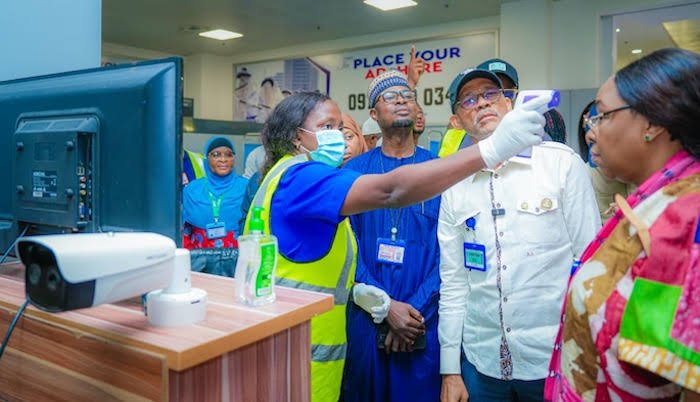
The measures include tracing and monitoring contacts, reinforcing infection prevention and control at the health facility where the patient received care, and preparing health teams to identify and respond to any additional suspected cases.
Officials have emphasised that inclusion on a contact-monitoring list does not mean an individual is infected. Monitoring is a precaution intended to identify symptoms promptly if they develop.
Anambra Reports 33 Cleared, Seven Still Under Follow-Up
Anambra State Commissioner for Health Afam Obidike said the state had followed up 40 persons of interest as of October 20.
Of the 40 people, 33 had completed their monitoring period and been cleared, while seven remained under active follow-up. The seven were reported to be stable at the time of the announcement.
The state government said it had strengthened surveillance at the airport, markets, motor parks and other public locations. It also urged residents to cooperate with health officials and avoid circulating unverified claims or identifying people undergoing monitoring.
Obidike said Anambra had no confirmed Ebola case at the time of his briefing. The people under follow-up are being monitored because of possible exposure or relevant travel histories; their inclusion does not establish that they have contracted the virus.
WHO Urges Calm and Cooperation
The WHO has advised Nigerians to remain calm, follow reliable public health information and cooperate with authorities. It has also stressed that a single imported case does not automatically mean the country is experiencing an Ebola outbreak.
Ebola is transmitted through direct contact with the blood or other bodily fluids of an infected person and contaminated materials. Residents should practise hand hygiene, avoid contact with potentially infectious bodily fluids and promptly report suspected exposure or concerning symptoms.
People who believe they may have been exposed should contact public health authorities and provide relevant travel or contact information. Calling ahead before visiting a health facility can help healthcare workers prepare appropriate precautions.
The success of Nigeria’s response will depend on timely detection, effective contact tracing, protection of health workers and public cooperation as investigations continue.