


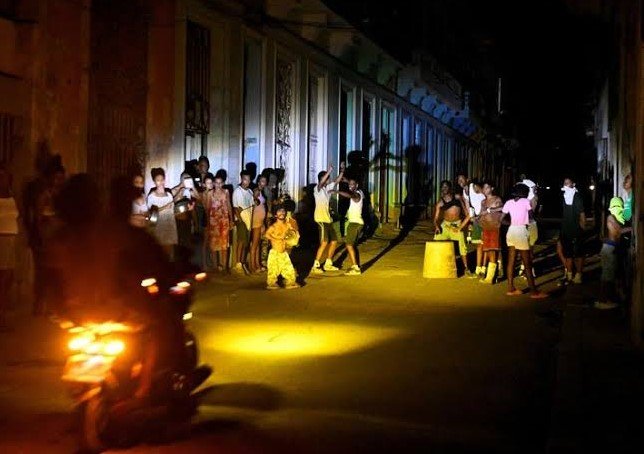
For many families in Havana, even 20 minutes of electricity has become a precious opportunity to cook, wash clothes and recharge essential devices as Cuba’s worsening energy crisis continues to plunge the country into prolonged darkness.
Seventy-two-year-old Leidis Rodríguez has learned to seize every brief return of power, even if it arrives unexpectedly in the early hours of the morning.
“When the lights come back, even at 3 a.m., I rush to cook beans or prepare whatever I can before the electricity disappears again,” she said.

Her daughter, Yaimara Matos, said the family now organises its entire life around the unpredictable power supply.
“We try to do everything at once—cook, wash clothes, iron, clean the house and escape the heat. What once took an entire day now has to be done in just a couple of hours,” she explained.
Across Cuba, scenes like this have become increasingly common as residents struggle through one of the country’s most severe economic and energy crises since the 1959 revolution.
The situation has deteriorated sharply following an oil blockade introduced by the Donald Trump administration in January, which restricted fuel supplies reaching the island.
Combined with decades of US sanctions, an aging electricity infrastructure and persistent economic challenges, the blockade has intensified daily hardships for millions of Cubans.
Unlike previous years, when authorities announced scheduled power cuts lasting two or three hours, electricity outages are now largely unpredictable.
Many households endure blackouts lasting 12 hours, 30 hours, or even longer, while nationwide grid collapses have become increasingly frequent. Last weekend alone marked the sixth nationwide power failure recorded this year.
The prolonged outages have disrupted virtually every aspect of life.
Public transport services have been reduced, cultural activities cancelled, businesses forced to shorten operating hours, and tourism—one of Cuba’s key sources of foreign exchange—has continued to decline.
The hospitality industry is reportedly grappling with around 25,000 vacant positions, while flight cancellations, shortages of medicine and food spoilage caused by powerless refrigerators have further compounded the crisis.
With gasoline also in short supply, many Cubans have been forced to improvise.
Some families rely on small fuel-powered generators, although rising fuel costs limit how long they can operate them.
Others have installed solar panels supplied by relatives abroad, purchased rechargeable fans and lamps, or switched to bicycles and solar-powered transport.
For Lianet Barroso, cooking over a wood fire has replaced the convenience of using a gas stove.
Whenever electricity briefly returns, she stores as much water as possible in plastic containers, uncertain when the next opportunity will come.
“Life in Cuba has become extremely difficult, exhausting and depressing,” she said.
The worsening situation has also sparked growing public frustration.
Residents in several Havana neighbourhoods and other municipalities have staged protests over blackouts lasting more than two days, banging pots and pans while setting piles of rubbish ablaze in the streets.
Meanwhile, soaring inflation and the rising value of the US dollar have pushed basic food items beyond the reach of many families.
For Caridad Delgado, a 64-year-old engineer, surviving the crisis has become possible only because of financial support sent by her three children living abroad.
Speaking by the light of a rechargeable lamp during another evening blackout, she reflected on how dramatically daily life has changed.
“At this time of night, I would normally be watching my favourite television programme. Now, that feels like a distant dream,” she said.