



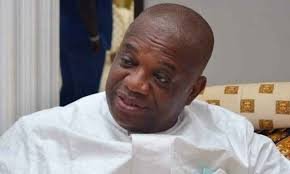
Senator Orji Uzor Kalu, representing Abia North, has urged President Bola Tinubu to consider granting a two-year amnesty to former public officials and other Nigerians accused of hiding or embezzling public funds, provided they return the money to the country.
Kalu said recovering such funds and bringing them back into the formal financial system could help strengthen Nigeria’s economy and increase the availability of capital for productive activities.
The former Abia State governor made the proposal while speaking on News Central TV’s programme, 60 Minutes With Mr. Kay.

According to Kalu, the Federal Government should give individuals accused of taking public funds an opportunity to voluntarily return the money without facing prosecution.
He appealed to President Tinubu to consider granting full pardon to those who take advantage of the proposed amnesty and return the funds.
“I propose that President Tinubu offer a two-year amnesty, allowing anyone who has hidden money since 1960 to return it to Nigeria without facing any consequences,” Kalu said.
He argued that encouraging people to return hidden funds could provide economic benefits to the country.
“Encourage individuals to bring this money back and utilise it to benefit our economy,” he added.
Kalu also claimed that large amounts of money could be kept in private residences across Abuja, although he did not provide evidence to substantiate the figure.
He suggested that if residences across the Federal Capital Territory were searched, billions of naira could potentially be recovered.
The senator further argued that money kept outside the banking system does little to support economic activity because it cannot be effectively channelled into lending, investment and other productive uses.
He maintained that funds deposited in banks could contribute to economic growth by increasing liquidity within the formal financial system.
Kalu’s proposal comes amid continuing efforts by the Federal Government and anti-corruption agencies to recover assets linked to alleged corruption and financial crimes.
While proponents of asset recovery have consistently called for stronger action against corruption, Kalu’s proposed amnesty would shift the emphasis toward voluntary repayment and the reintegration of allegedly hidden funds into the economy.
The proposal is likely to generate debate over whether individuals accused of corruption should be offered immunity in exchange for returning public funds, particularly in cases where criminal investigations or court proceedings are already underway.