



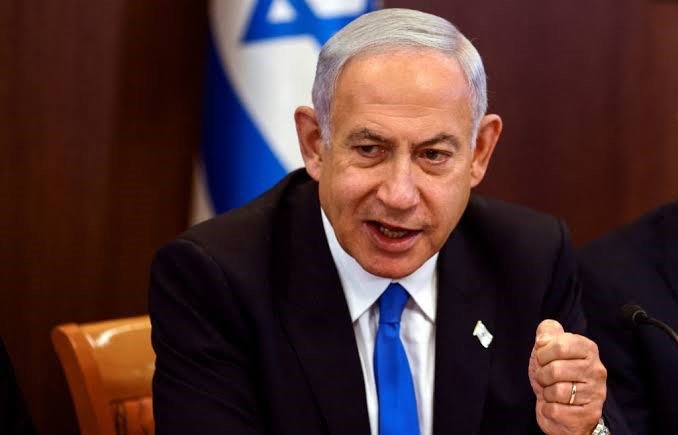
Israeli Prime Minister Benjamin Netanyahu has rejected US President Donald Trump’s proposed 15-point plan for Gaza, insisting that a military withdrawal won’t occur until Hamas is “truly” disarmed.
Last month, Trump’s Board of Peace announced an agreement for the “full disarmament” of Hamas and other armed factions in Gaza. However, Hamas responded by stating that surrendering its heavy weapons depends on Israel ending “all forms of aggression” and pulling its forces out of Gaza.
Despite an initial ceasefire agreement in the territory last October, Israel continues to carry out strikes on Gaza. On Sunday, Netanyahu made it clear during a cabinet meeting that “Israel rejects the 15-point document.”

Netanyahu emphasized that the Israeli military “will not withdraw until Hamas is genuinely disarmed and will continue to counter threats to our forces and citizens.”
Meanwhile, a Hamas official informed the BBC that the group “reaffirms its commitment” to the agreement and is ready “to seriously and responsibly implement” the 15-point plan. They urged mediators to ensure “all parties adhere to what has been agreed.”
Israel’s rejection poses another challenge to Trump’s Gaza peace plan, which was unveiled in September last year. The plan aimed to create a Board of Peace to supervise the agreement’s execution, alongside disarming Hamas, withdrawing Israeli troops, and reconstructing Gaza.
While Netanyahu’s dismissal of the plan isn’t surprising, it underscores the difficult position he faces. He seems dissatisfied with Trump’s proposal but also desires to maintain a strong relationship with his closest ally.
Just over a week ago, Trump announced what he described as a “monumental step toward lasting peace and security,” claiming Hamas had agreed to disarm for the first time, provided Israel withdraws its forces from Gaza.
On Sunday, Netanyahu made it clear this would not happen under his leadership. He stated that Hamas must disarm first, stressing that it couldn’t be a “fictitious disarmament” but a substantial one.
In reality, any disarmament and Israeli troop withdrawal would likely need to occur gradually. Netanyahu mentioned ongoing discussions with US officials on the path forward. “They have ideas; some of them are acceptable to us and some are not, and we know how to stand firm on these issues,” he remarked.
With Israeli elections approaching and pressure from his right-wing coalition members to adopt a hardline stance on Gaza, Netanyahu is unlikely to make significant concessions. He faces demands from far-right coalition elements for a new cabinet vote to terminate the Gaza plan, including National Security Minister Itamar Ben Gvir who deemed the draft “unacceptable.”
On Tuesday in Gaza City, large crowds gathered for a mass funeral for 112 people, mostly women and children, killed in an Israeli strike on a residential block in late 2023.
According to the United Nations, around 1.9 million people—or 90% of Gaza’s population—have been displaced since the war in Gaza began. The conflict was ignited by a Hamas-led attack on southern Israel on October 7, 2023, resulting in around 1,200 deaths and 251 abductions.
BBC