


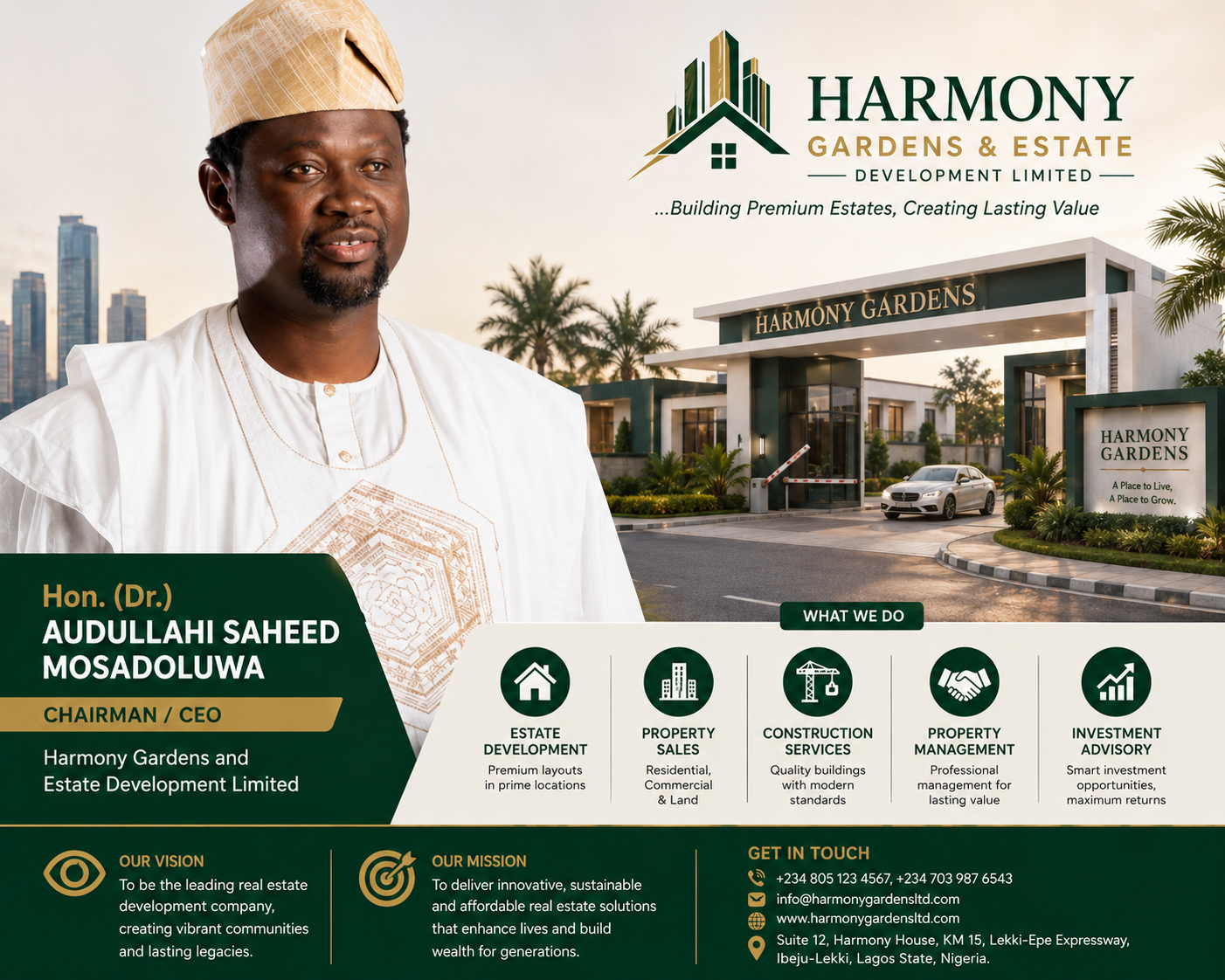
Few names in Lagos’ fast-growing real estate sector attract as much attention and debate as Saheed Mosadoluwa, popularly known as Saheed Ibile.
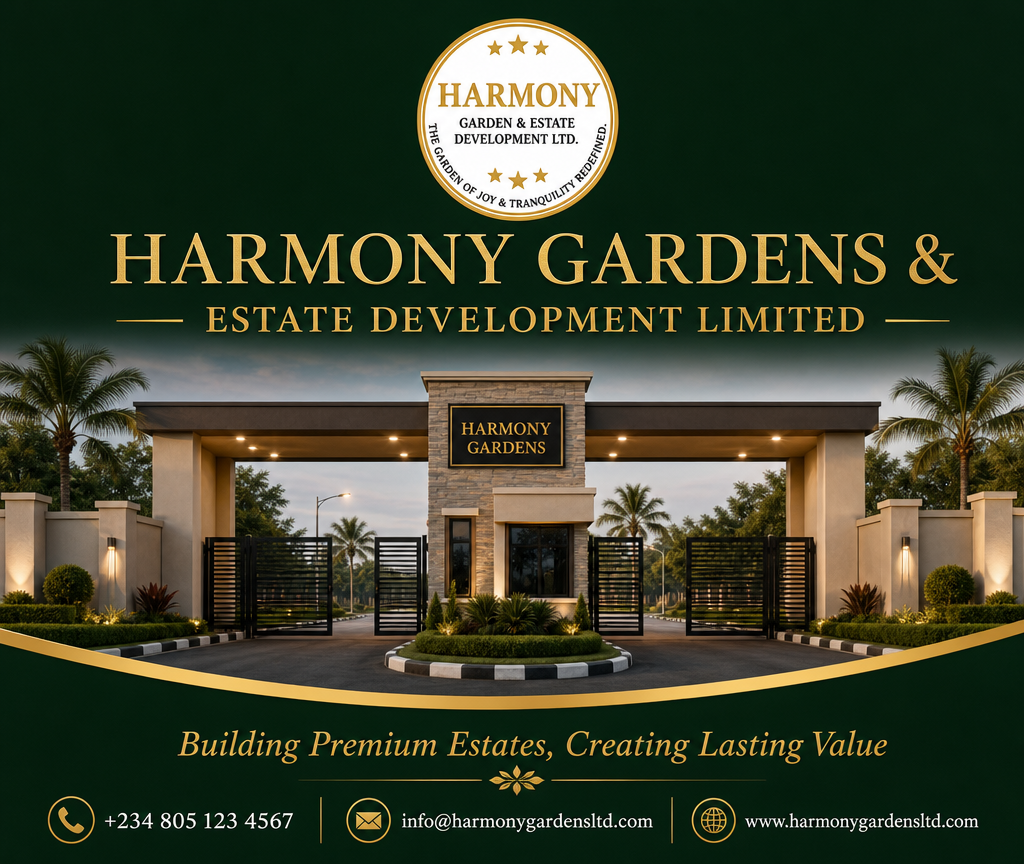
As the Chief Executive Officer of Harmony Gardens & Estate Development Limited, Mosadoluwa has built a substantial property development portfolio, with the long-term value of his projects reportedly projected to exceed $2 billion.
His business activities are concentrated largely around the Ibeju-Lekki axis of Lagos State, an area experiencing rapid economic transformation as major industrial, transportation and infrastructure projects continue to reshape the region.
Building a Real Estate Empire
Mosadoluwa’s business strategy has centred on acquiring large parcels of land and developing residential communities aimed at different segments of the property market.
Among the developments associated with his company are Granville Estate and Lekki Aviation Town.
The growth of Ibeju-Lekki has provided an important opportunity for property developers, as the area has increasingly attracted investors and businesses because of its proximity to major infrastructure and industrial developments.
For Mosadoluwa, the transformation of the axis has created an opportunity to position real estate not simply as a property business but as a long-term wealth-creation platform.
The Ibile Traditional Mortgage System
One of the initiatives associated with Mosadoluwa is the Ibile Traditional Mortgage System, which is designed to provide an alternative route to homeownership for middle-income Nigerians.
The concept seeks to address one of the major challenges confronting Nigeria’s housing sector: the difficulty many working-class and middle-income families face in accessing conventional mortgage financing.
By developing payment structures intended to make property acquisition more accessible, the initiative reflects the growing demand for alternative approaches to housing finance in Nigeria.
Beyond Real Estate
Mosadoluwa’s professional career extends beyond property development.
He has also held leadership positions in the aviation industry, including roles as Director General of New Horizon Aviation Agency and Chief Executive Officer of Royal Crystal Airways.
His involvement in different sectors has contributed to his public profile as a businessman with interests extending beyond real estate.
Legal Controversies and Public Scrutiny
Despite his commercial achievements, Mosadoluwa’s career has also been accompanied by legal disputes and public controversy.
In October 2023, the Lagos State Government reportedly arraigned him over allegations including kidnapping, conspiracy and malicious damage to property.
These are allegations and should not be interpreted as a finding of guilt. Mosadoluwa has denied wrongdoing and has reportedly described some of the accusations against him as attempts by business rivals to damage his reputation.
He has also faced accusations of involvement in disputed land acquisition activities, with critics using the term “land grabber” in reference to some of the controversies surrounding his property dealings.
Mosadoluwa has consistently rejected such accusations.
The disputes highlight a wider problem within Lagos’ rapidly expanding property market, where land ownership, documentation, acquisition and development frequently become sources of conflict among individuals, communities, businesses and government authorities.
Community and Religious Leadership
Beyond his business activities, Mosadoluwa has developed a profile within his local community.
In February 2024, he was reportedly turbaned as the Baba Adinni of Osapa London, a position reflecting his involvement in the local Muslim community.
His supporters have also pointed to philanthropic initiatives associated with him.
These reportedly include financial assistance to more than 1,000 widows as well as youth empowerment programmes.
Such initiatives have helped create a different dimension to his public image, particularly among members of communities where his businesses operate.
Ibeju-Lekki: The Bigger Opportunity
The story of Saheed Ibile is closely connected to the transformation of Ibeju-Lekki.
The axis has become one of the most closely watched areas of Lagos because of its growing industrial, commercial and infrastructure potential.
Major developments in the wider region have increased interest in land and property, attracting developers, investors and prospective homeowners.
As infrastructure expands, property values in strategically located areas can increase, creating opportunities for developers who acquire and develop land early.
This environment has helped make Ibeju-Lekki a major frontier for real estate investment.
A Businessman at the Centre of Debate
Mosadoluwa’s rise illustrates both the opportunities and challenges associated with Lagos’ property industry.
To investors and prospective homeowners, his estates represent opportunities to participate in one of Nigeria’s most dynamic property markets.
To critics, however, the controversies surrounding some of his land dealings demonstrate the risks associated with property acquisition in a city where land disputes remain common.
His supporters point to his business expansion, housing projects, community involvement and philanthropic activities, while his critics continue to question aspects of his business dealings.
The Road Ahead
As Ibeju-Lekki continues to develop, the business activities of major property developers such as Mosadoluwa will remain under public scrutiny.
The future of his real estate portfolio will depend not only on the continued expansion of the Ibeju-Lekki corridor but also on the ability of developers to maintain transparent land documentation, comply with regulations and build confidence among investors and communities.
For Saheed Ibile, the journey so far has been one of ambition, expansion, controversy and public engagement.
Whether viewed through the lens of entrepreneurship, property development, community leadership or the challenges surrounding Lagos land administration, his story reflects the opportunities and complexities of building wealth in Nigeria’s rapidly changing commercial capital.