



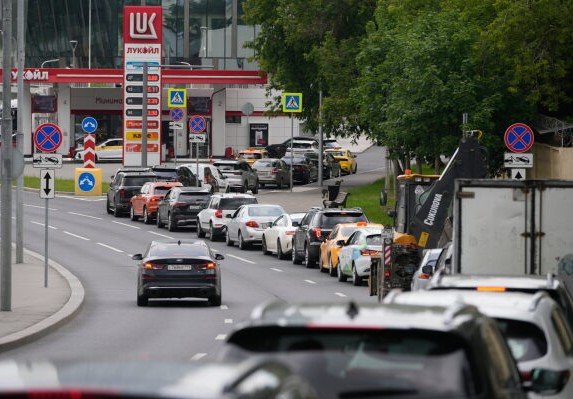
Russia is experiencing a resurgence of petrol shortages, particularly noticeable in Moscow and other regions, leaving motorists waiting in lengthy queues with uncertainty about when fuel supplies will be replenished.
At a petrol station in south-east Moscow, a driver named Svyatoslav had already spent two hours waiting when the station suddenly announced that petrol was unavailable. Despite this, he remained hopeful about replenishment, though unsure whether it would happen later that day or the next. His limited fuel supply meant he couldn’t easily search for another station.
Petrol shortages have been reported throughout Moscow and various parts of Russia recently. Officials point to unexpected maintenance at oil refineries as a cause. However, these repairs coincide with ongoing Ukrainian drone strikes targeting Russian oil facilities. Previous strikes on energy infrastructure have contributed to fuel shortages within the country, suggesting that Russia’s refining and distribution systems are under renewed pressure. The Russian newspaper, *Nezavisimaya Gazeta*, has termed this situation as a “second wave of the fuel crisis.”

For some drivers, finding petrol has become a daily ordeal. At one Moscow station, about 80 vehicles were seen queued up. A motorist named Elizaveta tried to purchase petrol late at night, only to find the station temporarily closed, forcing her to return to the queue after midnight. Another driver, Lyubov, shared similar experiences of encountering stations without fuel while traveling to Moscow from the regions.
These fuel shortages highlight the domestic impact of Russia’s conflict with Ukraine. Ukraine has stepped up attacks on Russian energy infrastructure, particularly oil refineries, aiming to disrupt a critical source of revenue and military logistics. For Russian drivers, the impact is immediate—longer queues, unpredictable supplies, and increased difficulty in obtaining fuel. While patriotic messages still adorn Moscow’s billboards, the growing petrol shortages reveal a stark reality of the ongoing war’s pressures on everyday life.