


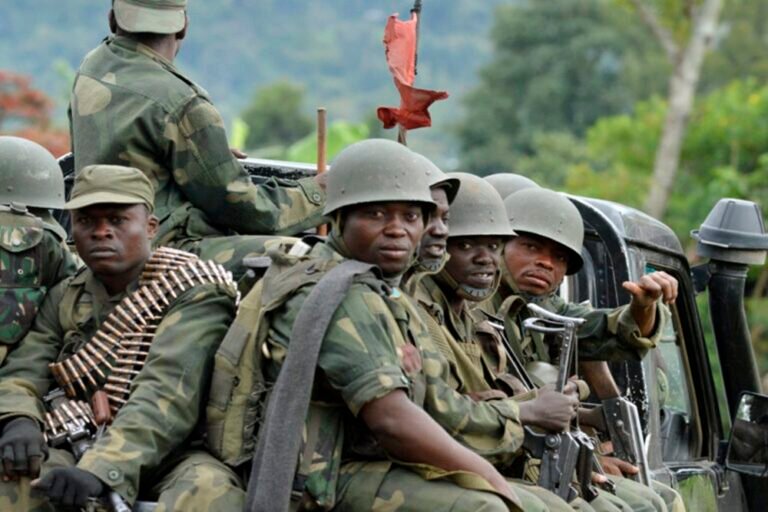
A mission to monitor the ceasefire between the Congolese army and the Rwanda-supported M23 rebels has commenced in the eastern Democratic Republic of the Congo. This initiative is part of diplomatic efforts aimed at resolving years of conflict in this mineral-rich region.
Starting on Monday, the ceasefire verification mission includes representatives from the Congolese government and M23, along with observers from member countries of the International Conference on the Great Lakes Region (ICGLR). The team arrived in Minembwe, South Kivu Province, using United Nations helicopters, an area recently plagued by intense fighting.
This mission follows Switzerland’s announcement that the DRC government and M23 have agreed on a roadmap for peace negotiations after talks held from August 17 to 21.

Mission to Visit Key Conflict Areas
According to sources from the UN and the government, the verification team plans to visit several conflict-affected locations. They will travel to Uvira, where M23 withdrew in January, and Kalehe, which has seen fighting in recent weeks. Minembwe is highlighted as particularly significant due to the intense clashes nearby and difficulties international organizations have encountered accessing parts of the region.
As of now, neither the Congolese government nor M23 has provided a detailed public response to Monday’s verification mission.
Ceasefire Monitoring at the Heart of Peace Roadmap
The mission stems from an agreement between the DRC and M23 to monitor alleged ceasefire violations. They agreed on standard procedures for reporting violations and set up a mechanism to review progress and address challenges in implementing the Doha Framework Agreement.
Recent negotiations involved representatives from the United States, Qatar, Switzerland, the African Union Commission, and Togo, acting as an African Union mediator. These developments have cautiously renewed hopes that this diplomatic initiative might rejuvenate a peace process that has often stalled.
Ongoing Fighting Despite Peace Efforts
Eastern DRC has been a hotspot for decades of conflict involving numerous armed groups vying for territory and control over mineral resources. International mediation led by the United States and Qatar previously resulted in agreements among Kinshasa, M23, and Rwanda, yet fighting persists despite repeated ceasefire commitments.
The DRC government and M23 frequently accuse each other of ceasefire breaches and attacks. Recently, Kinshasa accused M23 of serious human rights violations in areas it controls, alleging that over 300 people were killed in June and July. Meanwhile, M23 accused government forces of an artillery strike on a village near Minembwe.
These allegations have not been independently verified, with both sides continuously trading accusations throughout the conflict.
Human Rights Concerns
The conflict has escalated concerns over alleged abuses against civilians. Humanitarian organizations and UN experts have reported serious violations by armed groups in eastern Congo. M23 faces allegations of suppressing dissent, including against journalists and human rights activists within areas it controls.
As the ceasefire verification mission progresses, its capability to independently assess alleged violations and ascertain facts on the ground could be crucial for rebuilding trust between both parties.
For communities in South Kivu and other conflict-impacted areas, the key test will be whether these diplomatic commitments can lead to a sustained reduction in violence and eventually pave the way for lasting peace.