



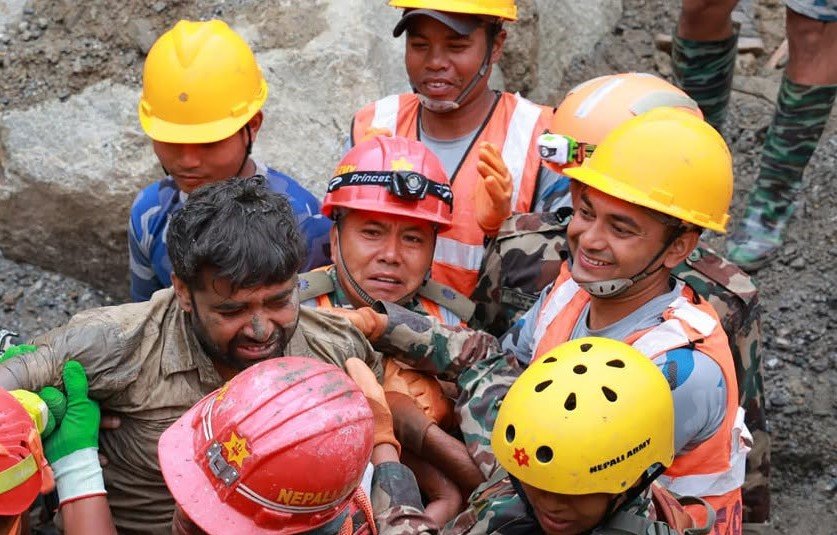
A dramatic rescue operation in Nepal has ended in a rare moment of hope after two workers were pulled alive from a flooded hydropower tunnel nine days after disaster struck the Nepal-Tibet border.
Sanjaya Shah and Kabir Maharjan were rescued from the Trishuli 3A Hydropower Project after spending more than a week trapped underground.
Both workers suffered injuries to their hands and legs and were flown to Kathmandu for medical attention, according to authorities.

Their survival has renewed hopes for dozens of other workers who may still be alive inside the tunnel.
Officials estimate that at least 39 people remain trapped at the Trishuli 3A site, while more than 100 people are still missing from several tunnel networks associated with hydropower projects along the Trishuli River.
The region was struck by catastrophic flooding last Wednesday, leaving widespread destruction in its wake. Buildings and roads were swept away, while thousands of people were reported missing.
The flooding is believed to have resulted from a glacial collapse, although rescue and recovery operations are still continuing across the affected areas.
The successful rescue of Shah and Maharjan was followed by the discovery of another body inside the same tunnel.
Suresh Raut, a deputy manager at the Nepal Electricity Authority, said rescuers were unable to immediately identify the deceased because the body had become swollen.
“It appears that the person died after being caught in floodwater while trying to flee from the tunnel,” Raut said.
Rescue teams have continued working despite the challenging conditions, with authorities hoping to reach those still trapped underground.
The two survivors’ rescue has provided a significant emotional boost to families and rescuers, particularly as the search for missing people continues against the backdrop of a disaster that has already caused more than 1,300 deaths.
Authorities are now focused on reaching the remaining workers and determining whether more people can be brought out alive.
For a region devastated by flooding and loss, the survival of the two workers offers a rare sign of hope amid an ongoing humanitarian emergency.