


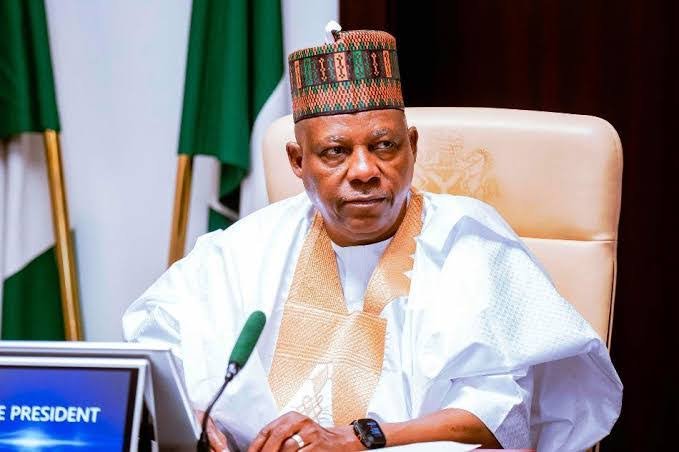
Vice-President Kashim Shettima has challenged state governments to take greater responsibility for addressing local electricity problems by establishing functional power markets and attracting private investment under the Electricity Act 2023.
Shettima delivered the message on Wednesday through the Deputy Chief of Staff to the President, Ibrahim Hadejia, at the National Stakeholders’ Workshop on the Electricity Act 2023 in Abuja.
The workshop brought together government institutions, electricity regulators and other stakeholders to examine how the legislation could support sustainable energy development and economic growth.

Reliable Electricity Key to Industrial Growth
The Vice-President said Nigeria’s ambition to develop a competitive industrial economy would remain limited unless reforms resulted in reliable electricity for businesses, households and public institutions.
He explained that the Electricity Act had created an opportunity for states to develop and regulate electricity markets within their jurisdictions, in line with the applicable constitutional and statutory framework.
Shettima urged state governments to move beyond dependence on the Federal Government and develop practical solutions based on their individual energy resources and economic needs.
He also cautioned that the passage of the law would not automatically improve electricity supply.
States that had yet to establish electricity regulatory institutions, he said, should begin the necessary legislative and institutional preparations and ensure that their regulators possessed the technical expertise to carry out their responsibilities.
Solar, Gas and Hydropower Opportunities
Shettima identified several energy resources that could support state-level electricity development.
He pointed to solar energy potential in Sokoto, Borno and Katsina; gas resources in Delta, Rivers and Bayelsa; and hydropower opportunities in Niger and Kebbi.
According to him, converting these resources into viable energy projects could improve electricity access and support agriculture, manufacturing, healthcare and education.
To accelerate progress, he proposed a voluntary National Electricity Reform Peer Review and Implementation Framework involving the Nigerian Electricity Regulatory Commission, the Federal Ministry of Power, the Nigeria Governors’ Forum and state electricity regulators.
The initiative would allow states to share experience, assess progress and identify challenges affecting investment, consumer protection and electricity access.
Private Capital and Consumer Protection
The Vice-President said public funding alone would not be sufficient to finance the transformation required in Nigeria’s electricity sector.
He urged states to establish transparent licensing processes, predictable regulatory arrangements, commercially viable electricity markets and effective dispute-resolution mechanisms to build investor confidence.
Shettima also called for stronger consumer protection, including measures against arbitrary billing, poor service and unfair commercial practices.
At the same workshop, Nigeria Governors’ Forum Director-General Abdulateef Shittu said the forum was working on a standard tariff framework intended to balance consumer protection with the need to attract investment and sustain electricity businesses.
The framework is expected to support coordination between state and federal institutions as the electricity market becomes more decentralised.
17 States Reported to Have Received Regulatory Transfers
Hauwa Yakubu, the Head of Compliance at the Nigerian Electricity Regulatory Commission, disclosed that regulatory transfers had been issued to 17 states, with Akwa Ibom the latest.
She said the commission was providing technical assistance and peer-to-peer training to help states establish and strengthen their regulatory institutions.
The Electricity Act 2023, signed by President Bola Ahmed Tinubu in June 2023, provides the legal framework for states to develop electricity markets within their jurisdictions while respecting the applicable constitutional and statutory boundaries.
The reform creates opportunities for state-level investment and planning, but its practical benefits will depend on implementation, institutional competence, infrastructure development and accountability.
For consumers, the central test will be whether the changes deliver more reliable electricity, fairer service and improved access to power.