


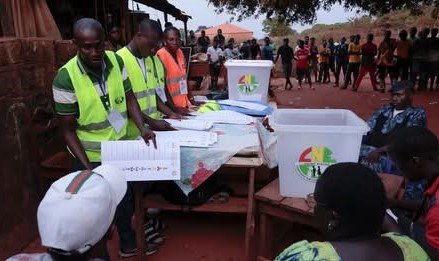
Guinea-Bissau has entered another important chapter in its long and turbulent political history as authorities begin counting votes from a referendum that could reshape the country’s system of government.
Voting ended on Sunday after citizens were asked to approve or reject a proposed new constitution. Electoral officials said turnout had passed 55 percent, while the first provisional results are expected on Tuesday.
The vote comes at a particularly sensitive moment for Guinea-Bissau, which remains under military rule following last year’s seizure of power.

A bid for greater presidential authority
At the centre of the referendum is a proposal to replace the existing parliamentary system with a presidential model.
If approved, the reform would give the president substantially greater control over the executive branch. The head of state would be able to appoint and dismiss the prime minister and members of government, while also gaining the authority to dissolve parliament.
Supporters believe the arrangement could end years of disputes between presidents, prime ministers and parliament, which have contributed to repeated political instability.
The military authorities say their goal is to create stronger institutions and provide a more stable political environment before the country returns to elected civilian government.
Opposition remains uneasy
Not everyone agrees with the process.
Opposition groups have urged citizens to stay away from the referendum, arguing that political freedoms have been restricted under military rule.
The debate therefore goes beyond the proposed constitutional changes. For many observers, the bigger question is whether the referendum can help Guinea-Bissau move towards lasting democratic stability or create another concentration of political power.
The country’s history provides plenty of reasons for concern. Since independence from Portugal in 1974, Guinea-Bissau has experienced several coups and numerous attempted takeovers.
The latest military intervention came shortly after a presidential election, when the armed forces removed the government and suspended the electoral process.
Eyes now on the results
The transitional authorities have promised a return to civilian rule through presidential and parliamentary elections scheduled for December 6.
General Horta N’Tam has said he will not contest the election under the transitional rules and has urged citizens to participate in the referendum.
For ordinary voters, however, the constitutional debate is closely connected to everyday concerns. Guinea-Bissau remains one of the world’s poorest countries, and years of political uncertainty have made economic progress difficult.
The referendum result could therefore become more than a vote on constitutional wording. It could determine how power is distributed in Guinea-Bissau and influence the country’s attempt to build a more stable political system.
With ballot counting now underway, the country waits to discover whether voters have chosen a new presidential system—and what that decision could mean for the future of democracy in Guinea-Bissau.