


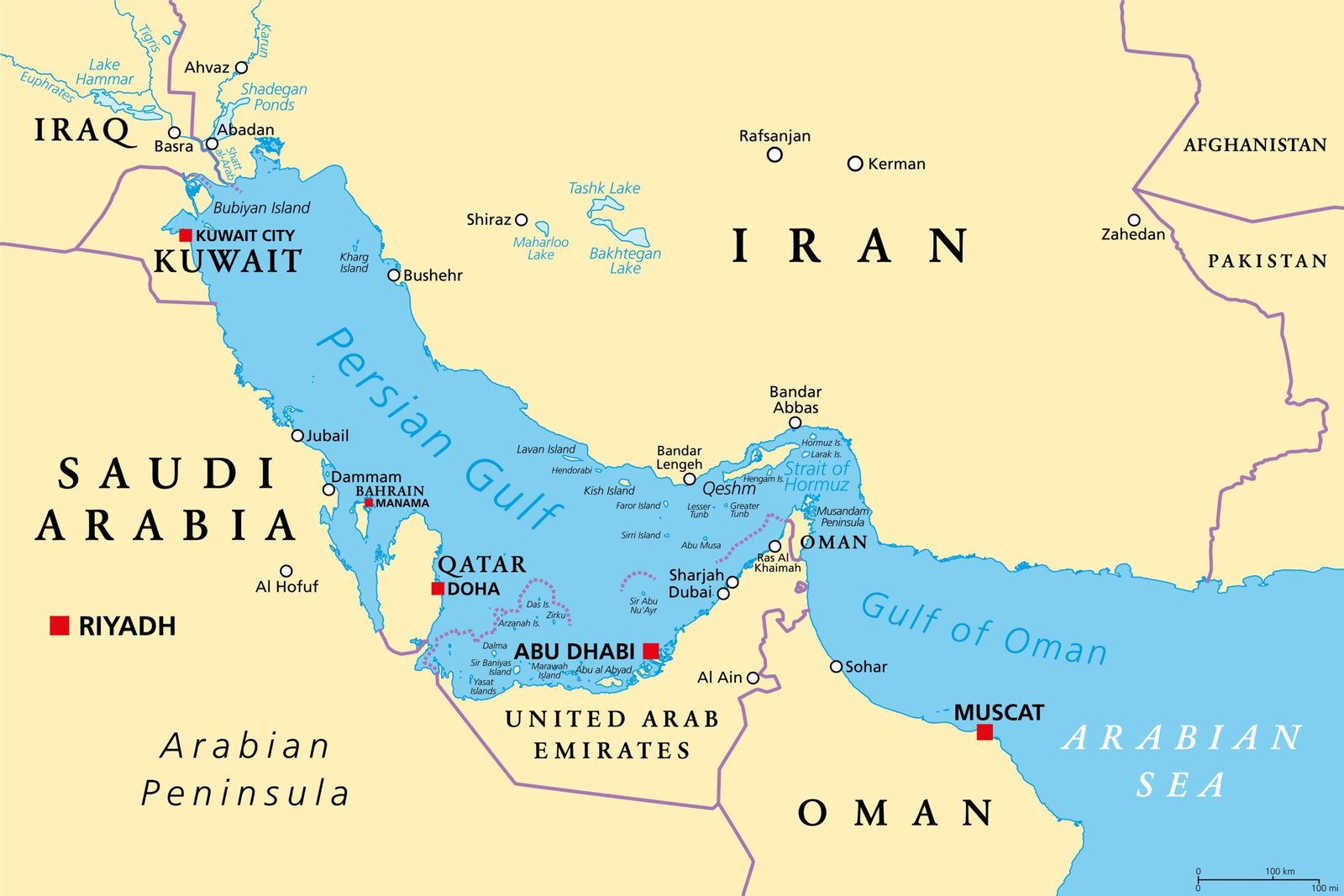
Iran has announced that it has reached the final stages of an agreement with Oman on a new shipping arrangement through the Strait of Hormuz, although Tehran warned that the deal alone will not guarantee safe navigation in the strategic waterway.
Speaking on the development, Iranian Foreign Ministry spokesperson Esmaeil Baqaei said security concerns in the Gulf remain unresolved, blaming the continued presence of US naval forces and restrictions around Iranian ports for the fragile situation.
Neither the United States nor Oman had officially responded to Iran’s announcement at the time of filing this report.

The Strait of Hormuz, one of the world’s most important maritime trade routes, handles roughly 20 per cent of global crude oil and liquefied natural gas (LNG) exports, making any disruption a major concern for international energy markets.
Tensions around the waterway escalated after military confrontations involving Iran, the United States and Israel earlier this year. Since then, Iran has significantly restricted access to parts of the strait, prompting fears of prolonged disruptions to global energy supplies.
The move previously drew sharp warnings from US President Donald Trump, who cautioned Tehran against keeping the waterway closed, saying such action would carry serious consequences.
Although US officials have hinted that diplomatic efforts could eventually restore normal shipping operations, Iranian authorities insist they are not engaged in direct negotiations with Washington.
Iran’s Deputy Foreign Minister, Kazem Gharibabadi, later disclosed that the proposed shipping arrangement with Oman could serve as a temporary measure lasting between two and four months while broader security issues remain unresolved.
Despite the progress, disagreements reportedly persist over Iran’s proposal to introduce transit charges for vessels using the Strait of Hormuz. Tehran is said to favour fees ranging between five and seven per cent of cargo value, while Oman reportedly supports a lower rate of about three per cent. The United States has maintained its opposition to any transit fees.
The prolonged uncertainty has continued to influence global energy markets, although international oil prices recorded modest declines in recent trading sessions.
Earlier diplomatic efforts to ease tensions, including a Memorandum of Understanding reportedly reached between Iran and the United States in June, ultimately collapsed, leading to renewed hostilities and continued military deployments in the region.
The security situation further deteriorated following a large-scale military confrontation involving Iran, the United States and Israel, which resulted in the closure of parts of the Strait of Hormuz and intensified regional instability.
Meanwhile, Iranian President Masoud Pezeshkian has acknowledged ongoing communication challenges with the country’s current leadership but stressed that national institutions remain functional despite widespread speculation over internal political developments.
Iranian authorities continue to insist that the country’s leadership remains united as efforts to stabilise the region and restore normal maritime activities continue.