



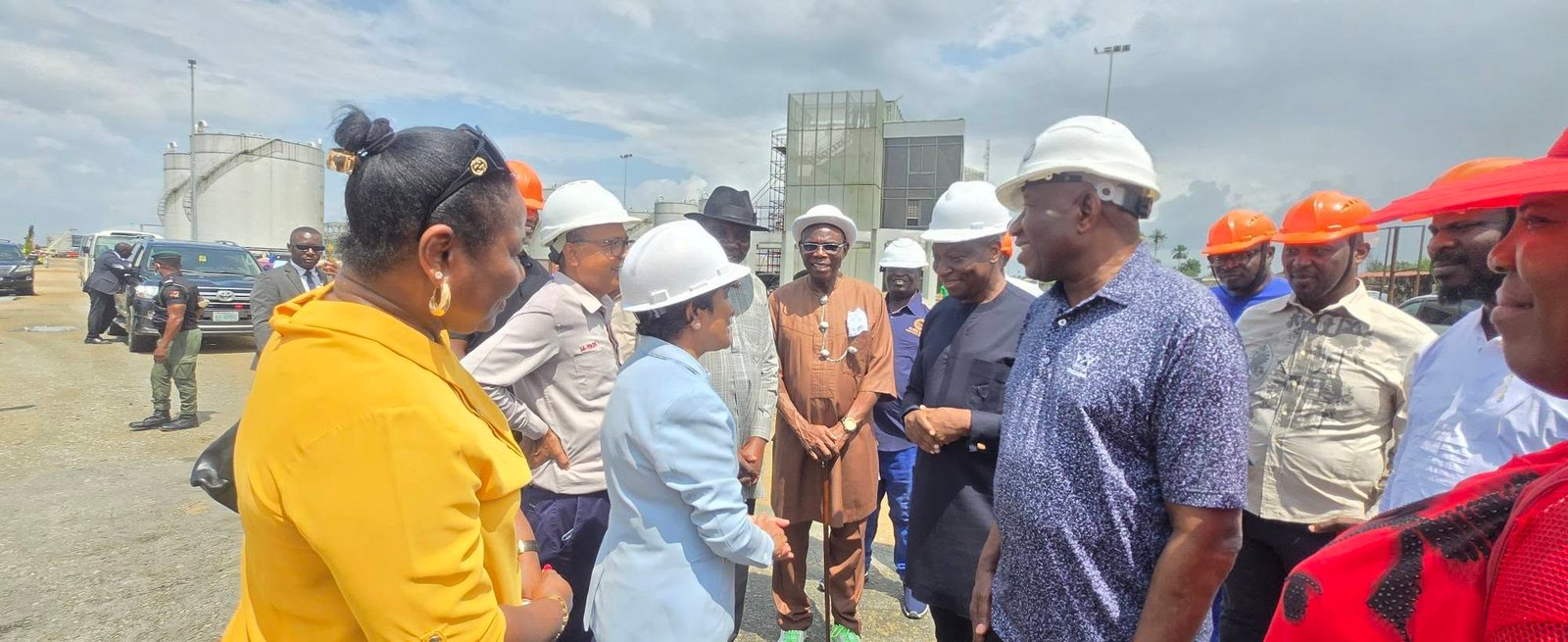
Former President Goodluck Jonathan has highlighted the potential economic significance of the Azikel Refinery project following an inspection visit to the facility in Yenagoa, Bayelsa State.
Jonathan said he was impressed by the progress of the refinery and described the investment as an example of private-sector participation in the industrial development of the Niger Delta.
During the visit, the former President said the project could help transform the region from primarily a crude oil-producing area into a centre for refining, manufacturing and other forms of value addition.

He said the refinery was designed to produce several refined petroleum products, including petrol, and could contribute to Nigeria’s efforts to increase domestic refining capacity.
Jonathan linked the development of additional refining capacity with wider national objectives such as energy security, industrialisation and economic diversification.
The former President also praised Azikel Group President, Dr Eruani Azibapu CFR, for his commitment to the project.
According to Jonathan, the investment reflects the potential of Nigerian private-sector companies to develop large-scale industrial infrastructure within the country.
He cited the Azikel Refinery alongside the Dangote Refinery as examples of major private investments in Nigeria’s refining sector.
Jonathan further argued that investments of this scale could create opportunities for employment and local value addition while reducing reliance on the export of crude oil without further processing.
The former President also recognised the financial and institutional contribution of development finance institutions to the Azikel project.
He commended the Africa Finance Corporation and its President, Samaila Zubairu, as well as the African Export-Import Bank and its President, George Elombi, for their support for the refinery’s development.
Jonathan said the Azikel Group had maintained a focus on building industrial infrastructure in the Niger Delta, processing Nigeria’s natural resources locally and creating employment opportunities.
The inspection comes as Nigeria continues to seek greater domestic refining capacity and increased value addition within the country’s petroleum industry.