



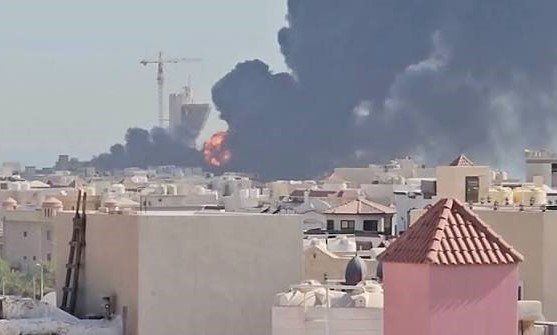
Tensions between Washington and Tehran have intensified after US forces struck two Iranian launchers on Larak Island, marking the first reported American attack on Iranian territory in weeks.
According to a US Central Command spokesman, the targets were hit after Iranian Revolutionary Guard personnel were reportedly seen preparing to launch rockets equipped with sea mines into the Strait of Hormuz.
The Iranian military has strongly condemned the attack and promised retaliation. Iranian media reported that the strike resulted in deaths and injuries, although details of the casualties remain limited.

The confrontation did not end with the attack on Larak Island. Iranian state media later reported that the IRGC had launched ballistic missiles against US military positions in Jordan.
Jordan’s armed forces said its air-defence systems intercepted eight missiles that entered the kingdom’s airspace during the early hours of Monday.
The latest developments have raised fears of another major escalation across the Middle East, particularly because of the strategic importance of the Strait of Hormuz.
The narrow waterway is a major route for international energy shipments, meaning any prolonged disruption could affect oil and gas supplies well beyond the region.
Washington has repeatedly warned Tehran against placing additional mines in the strait, while Iranian officials have dismissed American statements about the security of the waterway.
The confrontation is also unfolding against a backdrop of renewed US sanctions targeting Iran and increasing pressure on countries and entities accused of supporting Tehran.
As both sides exchange threats and military action, international attention is increasingly focused on whether the latest strikes will remain limited or develop into a wider regional confrontation.
For global markets and the shipping industry, the security of the Strait of Hormuz remains a major concern.