


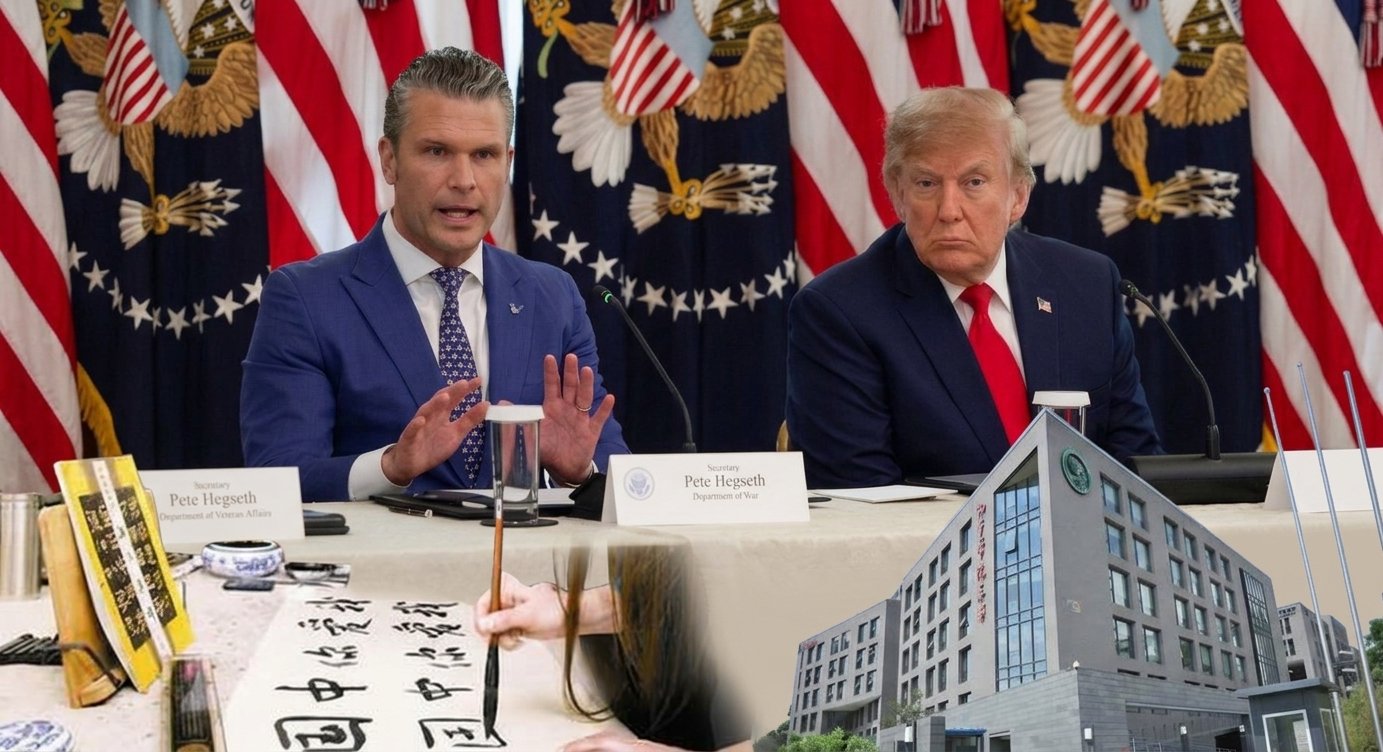
Beijing has condemned Washington’s decision to classify Confucius Institutes as a national security threat, as disagreements over foreign influence and university research deepen tensions between China and the United States.
China has accused the United States of unfairly targeting its cultural and educational programmes after the Pentagon designated Confucius Institutes as organisations posing a threat to American national security.
Chinese Foreign Ministry spokesperson Guo Jiakun made Beijing’s position clear on Monday, October 26, arguing that educational exchanges between the two countries promote understanding and mutual benefits.

The response followed an announcement by US Defence Secretary Pete Hegseth on Friday, October 23, that the Pentagon had added the organisations to its list of institutions considered national security concerns.
What Are Confucius Institutes?
Confucius Institutes are Chinese-funded language and cultural centres that have operated through partnerships with universities and other educational institutions in different countries.
They provide Chinese language instruction and cultural programmes. However, their funding arrangements and links to Chinese institutions have attracted scrutiny from some Western governments and university communities.
Critics in the United States have argued that the centres could provide Beijing with opportunities to influence university environments and restrict discussion of politically sensitive issues.
China rejects the suggestion that its educational programmes should be treated as security threats.
Hegseth Alleges Organisations Returned Under New Names
Announcing the Pentagon’s decision, Hegseth alleged that organisations associated with Confucius Institutes had returned to American university campuses under different names and legal arrangements.
He claimed that approximately 80 organisations had appeared across 30 universities, describing them as propaganda operations intended to steal intellectual property and influence students.
Hegseth also said the Pentagon had systematically dismantled the organisations over the preceding two months.
The allegations have not been independently established in full by the public evidence cited in the announcement. Hegseth did not identify a specific instance of intellectual property theft by a Confucius Institute in his remarks.
The claims nevertheless highlight Washington’s increasing emphasis on protecting research and monitoring foreign relationships involving American universities.
Pentagon Reviews University Partnerships
The designation comes amid wider US efforts to review research partnerships and funding relationships involving foreign entities considered security concerns.
The Pentagon recently reported completing initial research-security audits at 30 universities. According to the department, the reviews resulted in more than 80 actions to end or otherwise address relationships with entities on its list of concerns.
Such actions can include ending institutional relationships or taking precautionary measures. Their existence alone does not prove that every partnership involved illegal activity or espionage.
The reviews reflect Washington’s position that universities must take greater care when entering agreements involving foreign organisations, particularly where sensitive research may be involved.
Beijing Calls for Educational Cooperation
China has rejected Washington’s approach, maintaining that international education and cultural exchanges are mutually beneficial.
Chinese officials argue that cooperation between universities can improve understanding and create opportunities for students and researchers.
Beijing’s response also reflects wider frustration with US restrictions affecting Chinese research institutions and other organisations linked to the country’s scientific and educational sectors.
The dispute illustrates the challenge of separating legitimate research-security concerns from broader political competition between the two governments.
Education Becomes Another Front in US-China Competition
The disagreement over Confucius Institutes is part of a wider rivalry involving trade, technology, scientific research and global influence.
Washington says it must guard against foreign interference and protect sensitive intellectual property. Beijing argues that restrictions on Chinese institutions can undermine legitimate cooperation and encourage suspicion.
Universities are caught between these competing priorities as governments increase scrutiny of international partnerships.
The controversy also raises questions about academic independence, transparency in foreign funding and the appropriate balance between national security and international education.
For now, the United States is tightening its scrutiny of organisations it considers security risks, while China continues to oppose measures it views as discriminatory.
The central dispute remains unresolved: Washington says the measures protect national security, while Beijing argues that they unfairly stigmatise Chinese educational and cultural exchanges.