


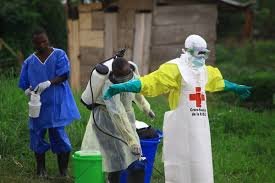
The Ebola outbreak in the Democratic Republic of Congo (DR Congo) has intensified, with health authorities reporting a sharp increase in infections across several of the country’s hardest-hit areas.
Officials say confirmed cases have doubled in some hotspots, raising fresh concerns over the pace of transmission as efforts to contain the deadly virus continue.
The worsening situation prompted World Health Organization (WHO) Director-General Tedros Adhanom Ghebreyesus to visit Kinshasa on Wednesday, where he held talks with President Félix Tshisekedi.

The visit, Tedros’ second since the outbreak was officially declared in mid-May, focused on strengthening the country’s response and mobilising additional international support.
He was accompanied by Africa Centres for Disease Control and Prevention (Africa CDC) Director-General Jean Kaseya, with both officials expressing concern over the accelerating spread of the virus.
According to the DR Congo Ministry of Health, the outbreak has so far recorded 3,874 confirmed cases and 1,751 deaths, making it one of the deadliest public health emergencies currently facing the country.
In response to the growing crisis, the United States announced an additional 242 million dollars in emergency assistance to support Ebola response operations, disease surveillance, healthcare services and humanitarian interventions.
Health experts said the current outbreak is being driven by the Bundibugyo strain of the Ebola virus, which remains particularly challenging because there is no approved vaccine or specific treatment currently available for the variant.
The outbreak has already become the second-largest Ebola epidemic ever recorded and is regarded as the fastest-spreading outbreak in DR Congo’s history.
Health authorities said surveillance, contact tracing, public awareness campaigns and improved access to healthcare remain critical to slowing transmission and preventing further loss of life.