


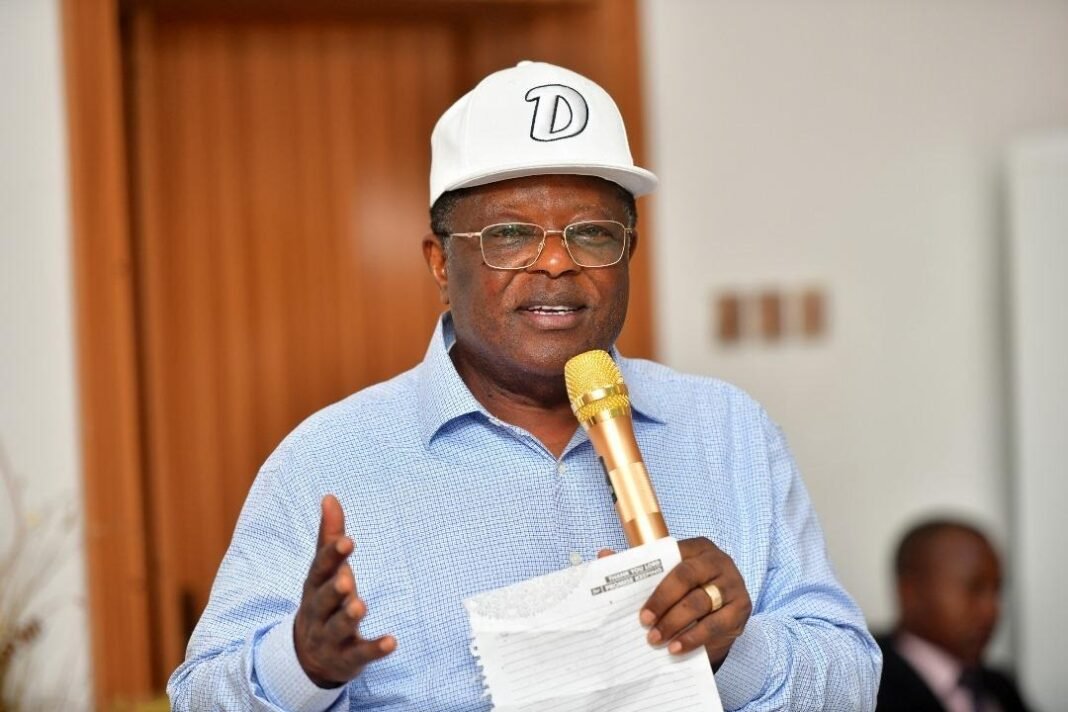
The Minister of Works, David Umahi, has strongly criticized the vandalism of road infrastructure across the country, calling the destruction of public assets “devilish,” “wicked,” and unacceptable.
He made these remarks on Sunday during a press conference and stakeholders’ engagement focused on the Lagos-Calabar Coastal Highway. At the event, he also initiated repair work on the Eko and Marine Bridges in Lagos.
Umahi appealed to Nigerians to aid the government in safeguarding public infrastructure, highlighting that neither the President, ministers, nor governors can monitor every national asset alone.

“It’s disheartening to see individuals investing efforts into destroying national assets. If they channelled this energy into labor on the Lagos-Calabar Coastal Highway or other construction sites of both state and federal governments, they could exert less effort and earn more. It’s pure wickedness and simply unacceptable,” he stated.
He emphasized that as the President and governors cannot oversee every project, collective action is necessary for protecting national assets. “When these roads are constructed under the President’s administration, they should last 100 years. However, if vandalized, it sets us back to square one, an outcome we pray to avoid,” he added.
His remarks followed recent vandalism of the newly constructed Festac-Alakija Bridge. Suspected scavengers reportedly attempted to steal embedded iron rods and other metal elements. In response, the Lagos State Government has apprehended 27 suspects after a joint operation by security and enforcement agencies.
Governor Babajide Sanwo-Olu inspected the damaged sections alongside engineers and contractors, assuring residents that the bridge remains safe and structurally sound while still open for traffic. He ordered immediate repairs and warned perpetrators and buyers of stolen government property of legal consequences.
The minister also expressed concern over unauthorized activities along sections of the Lagos-Calabar Coastal Highway, particularly regarding the theft of construction materials and illegal occupation.
“We have encountered individuals removing blocks, breaking fences, removing rods, and misusing the highway. This must stop,” Umahi insisted.
He instructed the Works Controller in Lagos to keep motorcycles, tricycles, hawkers, and other unauthorized activities off the coastal highway. “No keke or motorcycles on the coastal highway, no loitering—it’s not like this elsewhere within a superhighway.”
Following a late-night visit with National Assembly members, where people were found sleeping on the highway, Umahi reiterated the need for order: “No hawking or illegal occupation along the coast.”
He also called upon the Nigeria Security and Civil Defence Corps to enhance protection of essential national infrastructure, stating that the ministry had invited anti-corruption agencies to review its ongoing projects.
The Lagos-Calabar Coastal Highway is a major 750-kilometre, 10-lane development aimed at linking Lagos to Cross River and passing through several states. Overseen by Hitech Construction Company Limited under the Federal Ministry of Works’ supervision, this project is a key infrastructure endeavor intended to improve transportation, ease pressure on existing roads, and foster economic growth along the coastal route.