


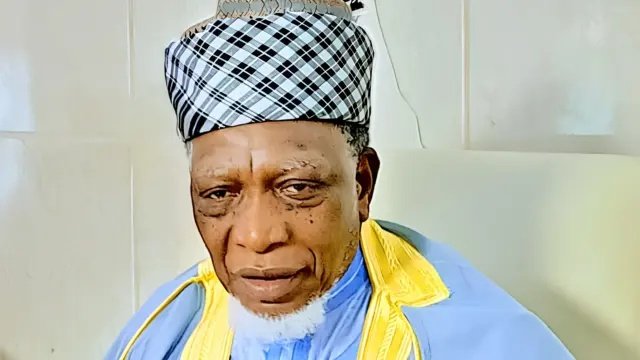
Four northern governors elected on the platform of the All Progressives Congress (APC) have come under criticism following their alleged reactions to controversial comments made by Islamic cleric Sheikh Yahya Jingir at a mass wedding ceremony in Kano State.
The governors are Abba Yusuf of Kano State, Umar Namadi of Jigawa State, Dauda Lawal of Zamfara State and Dikko Umar Radda of Katsina State.
The controversy followed remarks attributed to Sheikh Jingir during a mass wedding programme organised by the Kano State Government, where 1,500 couples were reportedly sponsored to get married.

During his address at the ceremony on Saturday, the cleric reportedly described Christians as infidels and argued that Nigeria belongs to Muslims.
He also defended his support for the APC’s Muslim-Muslim presidential ticket, saying the decision reflected what he described as the numerical strength of Muslims in the country.
Sheikh Jingir further suggested that Muslims were increasingly gaining control in Nigeria, remarks that have since generated strong reactions from Nigerians across religious and political divides.
Governors’ Reactions Spark Controversy
A video from the event circulated widely on social media, showing Sheikh Jingir making the controversial statements while the four governors were present.
Some viewers interpreted the reactions of some of the governors as cheering or applauding the cleric’s comments.
The apparent reactions have subsequently attracted criticism, with several Nigerians questioning whether elected leaders should appear to endorse statements capable of deepening religious divisions in the country.
However, the interpretation of the governors’ reactions remains a subject of public debate, with criticism largely based on the footage and the way their responses were perceived.
Fani-Kayode Expresses Concern
Former Minister of Aviation and former Nigerian Ambassador to South Africa, Femi Fani-Kayode, criticised the development, saying he was particularly disappointed by the alleged reaction of the Kano State Governor.
Fani-Kayode said the response attributed to the governor was, in his view, more troubling than the cleric’s controversial remarks.
He expressed sadness over what he described as the governor’s apparent applause and celebration of the comments.
The former minister also said Christians should not remain silent when they believe their faith is being subjected to political exploitation.
“We refuse to remain silent and allow our faith to be trampled upon due to politics,” he said.
Plateau Cleric Questions Governors’ Response
Another prominent religious figure, Prophet Isa El-Buba of Plateau State, also criticised the alleged reaction of the governors.
In a video shared online, El-Buba questioned why elected leaders would appear to support remarks that could aggravate religious tension, particularly at a time when several parts of northern Nigeria continue to face security and socioeconomic challenges.
He drew attention to persistent problems including banditry, criminality, drug abuse and poverty in parts of the North.
The cleric questioned whether political leaders should not be more concerned about addressing those challenges rather than appearing to endorse divisive religious rhetoric.
Social Media Reactions
The incident has also generated significant reactions on social media.
Dan Masani, a social media commentator, described the situation as disturbing and said his main concern was not only the cleric’s comments but also the alleged reactions of some of the governors present at the ceremony.
He specifically referenced the governors of Kano, Katsina and Jigawa, claiming that they appeared to applaud or agree with the cleric.
The incident has consequently triggered renewed debate over the relationship between religion and politics in Nigeria, particularly the role of political leaders in promoting peaceful coexistence between Christians and Muslims.
Growing Debate Over Religious Tolerance
Nigeria remains a deeply religious and culturally diverse country, with Christians and Muslims forming the two largest religious communities.
Although people of both faiths live and work together across the country, religious rhetoric has periodically contributed to tension, particularly when it becomes linked to political competition.
The latest controversy has therefore renewed calls for political and religious leaders to exercise restraint when discussing sensitive issues involving faith.
Critics argue that elected officials have a responsibility to promote unity and reassure citizens of different religious backgrounds, while supporters of the cleric’s position may view the remarks within the context of religious and political expression.
For the governors involved, the controversy has placed renewed attention on their public conduct and statements concerning religious issues.
As reactions continue, the central issue remains whether the governors’ gestures during the event amounted to endorsement of Sheikh Jingir’s remarks or were simply reactions to the proceedings that have been interpreted differently by viewers.
The debate is expected to continue as Nigerians discuss the responsibilities of political and religious leaders in maintaining peace, religious tolerance and national unity.