



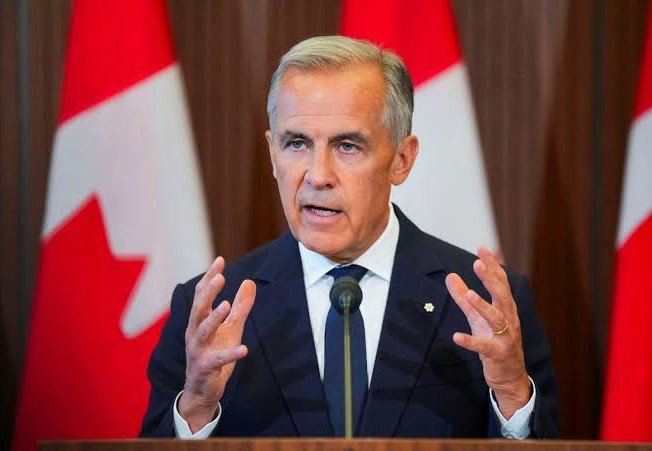
Canada may rely heavily on the United States for trade, but Ottawa still holds significant economic influence as tensions with President Donald Trump increase.
With approximately 70% of Canadian exports destined for the United States, this makes the US Canada’s most crucial trading partner. However, this relationship is equally vital to American states and businesses, as Canada stands as the leading customer for 26 US states and is among the top three export markets for 45 out of 50 states.
This situation grants Canadian Prime Minister Mark Carney some leeway to respond to Washington without targeting the entire US economy directly.

In response, Carney is planning strategic “dollar-for-dollar” countermeasures, focusing on products like steel, dairy, appliances, agricultural equipment, electronics, pulp, and paper. The Finance Department in Canada is also set to announce additional measures designed to protect domestic workers and businesses.
Energy as a Powerful Tool
One of Canada’s most potent sources of leverage lies in energy. According to Carney, Canada provides the majority of US imports of natural gas, electricity, and about 60% of its crude oil imports.
“I don’t think they want us to stop sending any of that energy,” Carney remarked.
While energy exports are not yet part of Canada’s planned retaliatory tariffs, officials have hinted that they could become a part of Canada’s strategy if the dispute escalates. Ontario Premier Doug Ford has even mentioned the possibility of an energy surcharge, following his brief proposition in 2025 of a 25% surcharge on electricity exports to the US, potentially impacting about 1.5 million homes and businesses in Michigan, Minnesota, and New York.
Such actions could significantly impact American consumers and businesses, especially in northern states heavily reliant on Canadian electricity.
Potash and Agricultural Influence
Canada’s leverage extends into agricultural commodities as well. The country stands as the world’s largest supplier of potash, a critical component in fertilizers essential to American agriculture. Ford has pointed out the US agriculture sector’s heavy reliance on Canadian resources.
“I’d love to see Trump run cars without any oil. I’d love to see him grow vegetables and fruit without potash,” Ford stated.
A disruption in potash supplies might lead to increased costs for American farmers and raise food production expenses.
Influence Through Critical Minerals
Canada is also abundant in critical minerals like lithium, nickel, and graphite, integral to industries focusing on electric vehicles, batteries, advanced manufacturing, and clean-energy technologies. With the US being Canada’s largest destination for these mineral exports, American industries could face vulnerabilities if Ottawa restricts or disrupts these supplies.
Thus, critical minerals could serve as another bargaining tool for Canada, providing influence while trying to avoid excessive harm to its own economy.
Impact on Key US States
The economic ties between Canada and specific US states also offer Ottawa political leverage. Canadian consumers and businesses could choose to target products and services from states whose economies heavily depend on Canadian markets. Given that Canada is the top export market for 26 US states and ranks among the top three for 45 states, any retaliatory actions could have impacts reaching beyond Washington. This dynamic introduces a political angle to the trade conflict; American governors, business groups, and lawmakers might press the Trump administration for a resolution if tariffs begin damaging their local economies.
Domestic Support Bolsters Carney’s Position
Carney seems to enjoy political backing at home for adopting a tougher approach. Polls reveal that many Canadians are against making significant concessions to Washington, and Ontario’s Ford has emerged as one of Trump’s most vocal critics. Ford’s blunt dismissal of Trump’s tariff threats — advising the US president where to look for tolerance — reflects the growing frustration among some Canadian leaders.
For Carney, balancing public support while safeguarding Canada’s economy presents a challenging task.
Navigating a High-Stakes Trade Situation
The overarching challenge for Canada is the dominance of the US as a trading partner. Ottawa must exercise caution not to use economic strategies that hurt Canadian businesses and consumers more than their American counterparts. Yet, with its stronghold on energy, electricity, oil, potash, critical minerals, and the US market itself, Canada possesses several avenues for effective retaliation.
The most successful approach may be applying targeted pressure rather than engaging in a full-scale economic conflict. As matters progress, Carney will need to evaluate how far Canada is prepared to advance — and whether the economic pressure it can exert will suffice in convincing Trump to reconsider his tariff strategies.