


As Nigeria moves closer to the 2027 political transition, 12 state governments are facing a combined debt burden of roughly N5.3tn, according to data from the Debt Management Office.
The debt stock covers both domestic and foreign obligations and involves states whose current governors are expected to leave office between 2027 and early 2028.
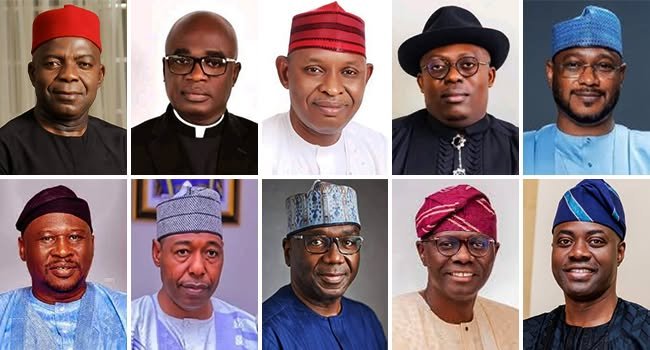
The states are Adamawa, Yobe, Nasarawa, Kwara, Ogun, Gombe, Bauchi, Lagos, Borno, Oyo, Imo and Bayelsa.

Among the governors affected are Umaru Fintiri of Adamawa, Mai Mala Buni of Yobe, Abdullahi Sule of Nasarawa, AbdulRahman AbdulRazaq of Kwara, Dapo Abiodun of Ogun, Inuwa Yahaya of Gombe, Bala Mohammed of Bauchi, Babajide Sanwo-Olu of Lagos, Babagana Zulum of Borno, Seyi Makinde of Oyo, Hope Uzodimma of Imo and Douye Diri of Bayelsa.
The DMO’s first-quarter 2026 figures put the combined domestic debt of the 12 states at N2.16tn. Their foreign debt, based on the latest available state-level external debt profile, stood at about $2.33bn.
For most of the governors, 2027 will mark the end of their second terms. The exceptions are Imo and Bayelsa, where Uzodimma and Diri are expected to remain in office until January 15 and February 14, 2028, respectively.
Lagos dominates the debt figures
The numbers reveal a significant gap between the states.
Lagos is responsible for the largest portion of the domestic debt, with liabilities of about N1.205tn recorded in the first quarter of 2026.
That amount alone represents more than 50 per cent of the combined domestic debt of all 12 states.
Nasarawa had the smallest domestic debt among the states, with approximately N27.15bn outstanding.
The difference is also evident in foreign borrowing. Lagos had about $1.174bn in external obligations according to the DMO’s 2025 profile.
Yobe recorded the lowest external debt, with its foreign obligations standing at approximately $46.67m.
Mixed records under the governors
The figures do not tell a uniform story about borrowing across the states.
Some of the administrations have increased their debt exposure since taking office, while others have managed to reduce domestic or external liabilities.
This means that the size of the current debt stock cannot, by itself, be used to determine how much borrowing occurred under each governor.
The final figures could also rise before the various governors complete their tenures if new loans are secured. Conversely, repayments or revised official data could alter the outstanding balances.
For the incoming administrations, the challenge will be to manage these existing obligations while continuing to finance infrastructure, education, healthcare, workers’ salaries and other government responsibilities.
With the next round of state leadership changes approaching, the debt positions of the outgoing governments are likely to attract increasing attention as political parties and voters assess their records.