


Gambian President Adama Barrow has promised a major improvement in electricity supply by the end of October following violent protests over prolonged power outages across the country.
The demonstrations, which escalated in Banjul and surrounding communities overnight from Monday into Tuesday, saw protesters set fires, block roads and chant calls for Barrow to leave office.
Police reportedly fired tear gas in the Westfield area as protesters moved towards the headquarters of the National Water and Electricity Corporation (NAWEC), the country’s main power provider.

The electricity crisis has affected communities for months, with some areas experiencing outages lasting as long as 48 hours. The situation has become particularly difficult during the current hot season.
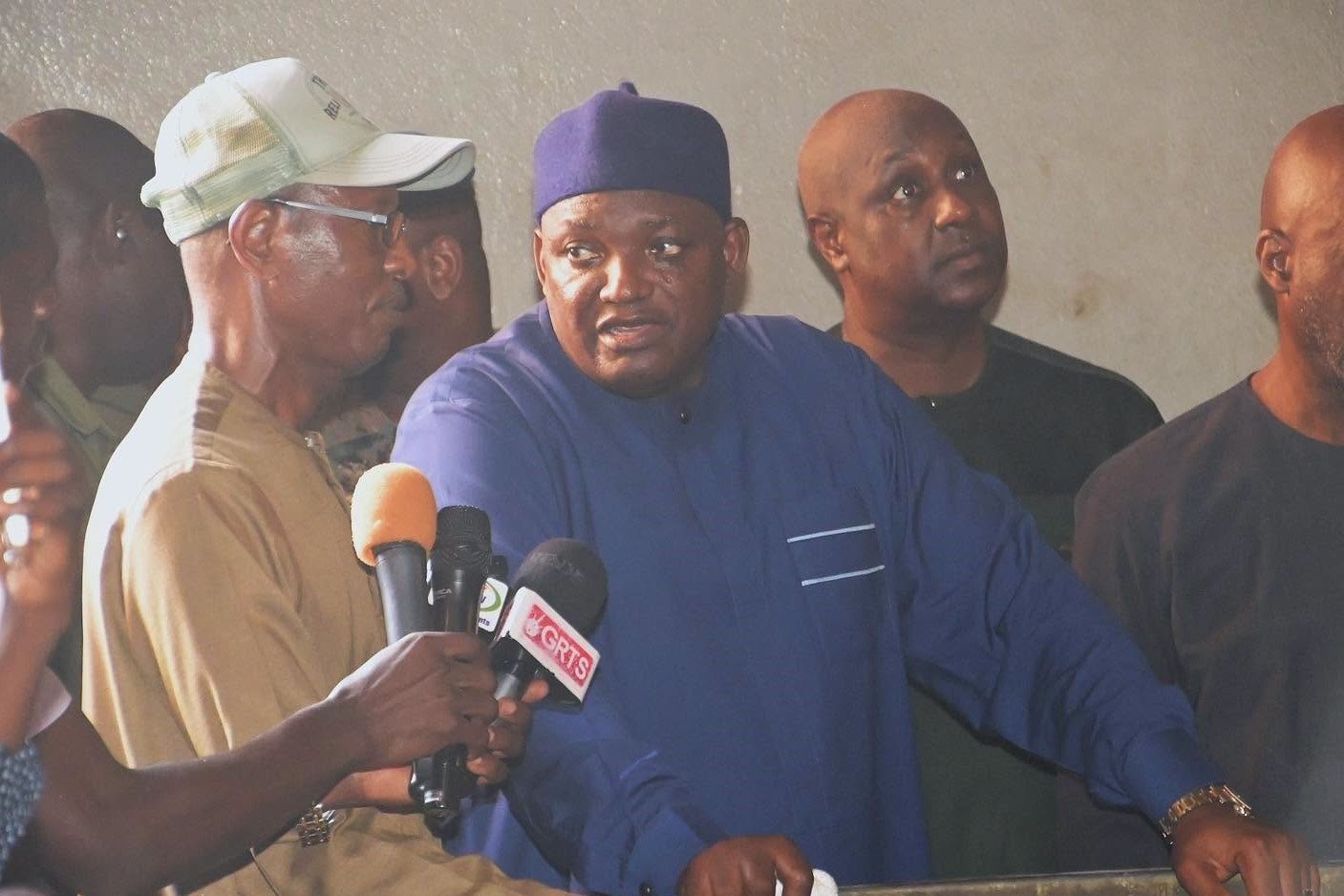
Barrow described the power crisis as both a national security concern and an emergency during a visit to the NAWEC power station in Brikama, near the capital.
In a televised address, the president acknowledged the impact of the outages on ordinary Gambians, including families struggling with extreme heat, children studying without electricity and households losing food because of prolonged blackouts.
He said the government was completing the installation of an additional 24-megawatt generation machine, which is expected to become operational by the end of October 2026.
Barrow also announced that a contract had been awarded for a 50-megawatt solar power plant in Soma, with the contractor preparing to commence work.
The president assured citizens that electricity supplies would improve significantly by the end of October.
NAWEC had previously attributed the outages to increased electricity demand, driven largely by high temperatures, as well as constraints affecting power imports.
NAWEC Managing Director Gallo Saidy said the challenges were also linked partly to climate change and the ongoing conflict in the Middle East, while urging citizens to remain patient.
Saidy cancelled his participation in a scheduled road inauguration to inspect facilities in Brikama and Kotu, two locations severely affected by the outages and subsequent protests.
Information Minister Ismaila Ceesay said the government was treating the situation with the highest level of urgency and was working to resolve the electricity crisis.
The protests have added pressure on the Barrow administration just months before the December presidential election, in which the president is seeking a third term.