


A proposed overhaul of Ethiopia’s political system has opened a new and potentially divisive chapter in the country’s politics, after a national dialogue endorsed the creation of an executive presidency.
The proposal would bring the powers of the prime minister and president together under one office, replacing the current arrangement in which the president largely performs ceremonial functions while executive authority rests with the prime minister.
The recommendation emerged from a national dialogue involving more than 4,000 delegates and could now be submitted to parliament for consideration when it resumes in October.

Supporters See a Stronger National Office
Those backing the proposal argue that Ethiopia needs a political system capable of producing stronger national leadership.
They say an executive president could serve as a unifying figure for Ethiopia’s many ethnic and regional communities and move political competition away from narrow regional identities.
The national dialogue also recommended reducing government support for political parties organised primarily along ethnic lines and encouraging parties with broader national platforms.
For supporters, these measures could help address some of the divisions that have repeatedly contributed to Ethiopia’s political instability.
Critics Fear a Power Consolidation
The proposal has nevertheless raised concerns among opposition figures and political analysts.
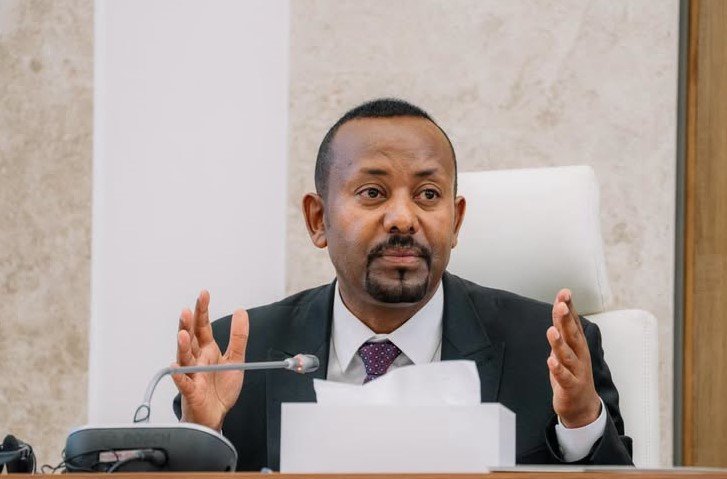
One of the biggest questions is what the new system could mean for Abiy Ahmed.
Abiy has been Ethiopia’s prime minister since 2018 and his ruling party secured another overwhelming election victory in June. If the constitutional changes are approved, parliament would choose the new president, and the legislature is dominated by Abiy’s political camp.
That has fuelled speculation that the prime minister could eventually move into the newly empowered presidential office.
Critics argue that combining executive authority in one position could weaken institutional checks and balances.
The comparison with Turkey’s executive presidency under Recep Tayyip Erdogan has also entered the debate.
Major Political Forces Were Missing
Another controversy surrounds the composition of the national dialogue itself.
Important opposition parties chose not to participate, while armed groups involved in conflicts in parts of the country were excluded.
That has led some observers to question whether the recommendations can produce a political settlement broad enough to address Ethiopia’s security crisis.
The country continues to face armed violence in Oromia and Amhara, while fears remain that instability could return to Tigray.
The previous Tigray war, which lasted from 2020 to 2022, caused enormous loss of life and left deep political and humanitarian scars.
Addis Ababa Debate Reveals Deeper Divisions
The status of Addis Ababa provided another reminder of how sensitive Ethiopia’s political questions remain.
Although the capital is constitutionally self-governing, its location within Oromia has long generated disputes over land, political authority and the rights of the Oromo population.
The issue produced heated exchanges during the dialogue, with some delegates reportedly leaving the meeting.
It illustrates why constitutional reform in Ethiopia cannot easily be separated from the country’s wider questions about federalism, identity and regional power.
What Happens Next?
The national dialogue has now produced its recommendations, but approval is far from the end of the process.
Parliament must determine how to handle the proposed reforms, while the government faces pressure to demonstrate that constitutional changes will serve the broader country rather than a particular political interest.
The coming months could therefore prove crucial.
If Ethiopia succeeds in building wider political agreement around the reforms, the proposed executive presidency could become part of a broader effort to strengthen national institutions.
If major opposition forces and armed groups remain outside the process, however, the reforms could deepen existing mistrust.
For Ethiopia, the central issue is no longer simply whether the country should change its political system. It is whether that change can produce greater stability and national unity without creating an excessive concentration of power.