


Nigeria is seeking to rebuild its trade relationship with India after Vice President Kashim Shettima’s visit to New Delhi.
Shettima represented President Bola Ahmed Tinubu at the 18th BRICS Leaders’ Summit.
The visit created opportunities for Nigeria to discuss trade, investment and cooperation with India and other BRICS members.

The Vice President has now returned to Nigeria.
India-Nigeria Trade in Focus
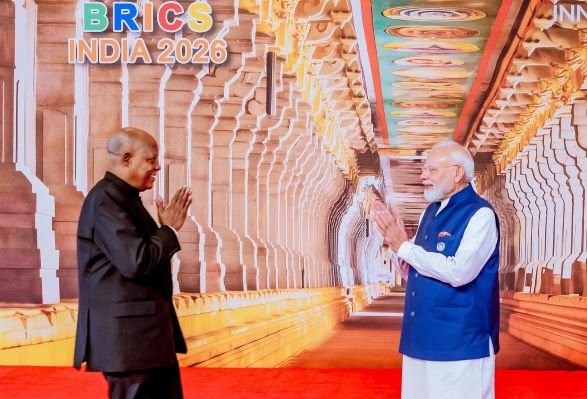
Shettima’s meeting with Indian Prime Minister Narendra Modi was one of the major highlights of the visit.
The two leaders explored ways to expand economic cooperation.
They discussed crude oil, healthcare, pharmaceuticals and defence.
Digital technology, fintech and renewable energy were also part of the discussions.
A major target is the recovery of bilateral trade.
Nigeria and India want to work towards returning trade to around $15 billion.
The relationship has weakened in recent years.
Trade dropped from $14.95 billion in 2021–22 to $7.13 billion in 2024–25.
It then rose to about $9 billion in 2025–26.
India Wants More Nigerian Oil
India has also indicated interest in buying more Nigerian crude.
That could provide Nigeria with another important market for its oil exports.
More crude sales could also support Nigeria’s foreign-exchange position.
However, the Nigerian government will consider the proposal as part of its broader economic and investment priorities.
Nigeria Backs Global Trade Cooperation
Shettima also met WTO Director-General Ngozi Okonjo-Iweala during the visit.
Nigeria used the engagement to reaffirm its support for the World Trade Organization.
The country also called for a global economic system that gives developing nations a stronger voice.
Shettima argued that international cooperation remains important for economic growth.
Nigeria therefore wants to strengthen partnerships rather than move towards economic isolation.
Tinubu’s Message at BRICS
During the summit, Shettima presented President Tinubu’s position on global governance.
Nigeria called for changes to international financial and governance institutions.
The country also highlighted its position as a major gateway to Africa.
The African Continental Free Trade Area is central to that strategy.
Nigeria hopes its large market can attract more foreign investment and encourage companies to use the country as a base for reaching other African markets.
Wider Economic Engagement
Nigeria’s discussions at the summit went beyond its relationship with India.
The country also engaged BRICS members and partner countries on several sectors.
These included agriculture, artificial intelligence and digital infrastructure.
Manufacturing, healthcare, energy and human-capital development were also discussed.
Such partnerships could bring investment and new technology into Nigeria.
They could also help Nigerian businesses gain access to wider international markets.
What the Visit Means for Nigeria
The BRICS summit has given Nigeria another platform to promote its economic interests.
The renewed discussions with India could be particularly important.
Stronger crude exports could support foreign-exchange earnings.
At the same time, wider investment in technology, manufacturing, agriculture and energy could help diversify the economy.
The next challenge is implementation.
Nigeria will need to turn the diplomatic discussions into actual investments, trade deals and long-term economic partnerships.