



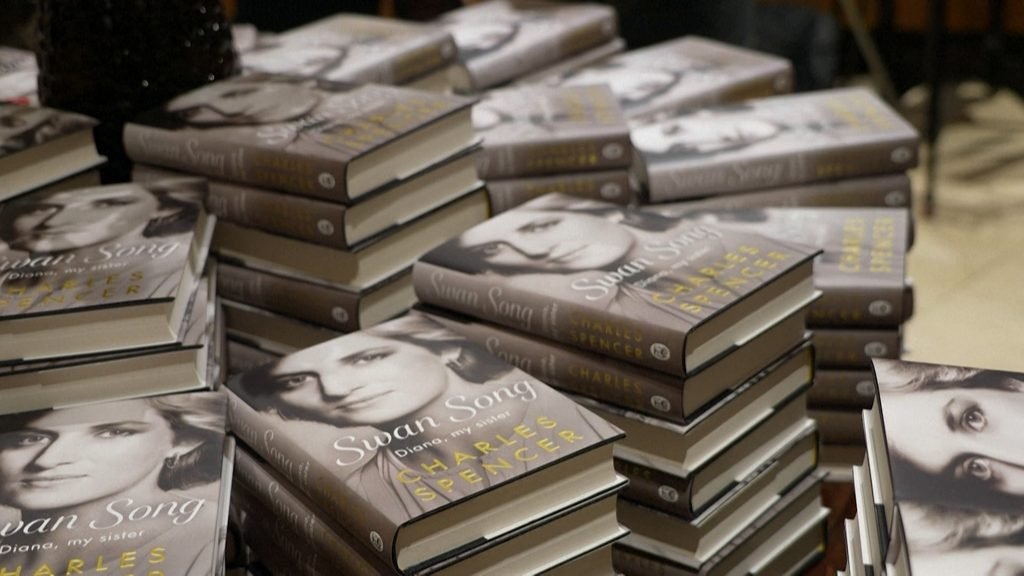
Nearly three decades after Princess Diana’s death, her younger brother, Charles Spencer, has returned to memories of her life and final days in a new memoir that has already generated controversy within royal circles.
Swan Song: Diana, My Sister gives Spencer’s personal account of the siblings’ childhood, Diana’s years in the Royal Family and the events that followed her death in Paris in 1997.
The book is being published by Penguin and runs to 384 pages.

Why Spencer Wrote the Book
Spencer, who holds the title of 9th Earl Spencer, says he wanted to record his own memories of Diana before more time passed.
He has expressed concern about stories concerning his sister that he believes have been repeated so frequently that disputed or inaccurate versions have become accepted as fact.
Rather than focusing solely on Diana’s public image, Spencer says the memoir is intended to show the person he knew privately as his sister.
That approach has nevertheless resulted in several highly controversial passages involving the Royal Family.
A Conversation Before Diana’s Funeral
One of the most closely examined sections concerns a conversation between Spencer and the then Prince Charles in the period before Diana’s funeral.
Spencer says the pair disagreed about whether William and Harry should participate in the procession behind their mother’s coffin.
Spencer says he was uncomfortable with the boys being exposed to the extraordinary public attention and grief surrounding the funeral.
He alleges that Charles responded during the discussion by saying:
“Rest assured, we’ll forget her soon enough.”
Spencer insists that this is an accurate recollection of the conversation.
Palace Pushes Back on Spencer’s Memory
The allegation was significant enough to prompt a response from Buckingham Palace.
A palace spokesperson did not directly confirm or deny the conversation but referred to the possibility that intense grief can affect people’s recollections of traumatic events.
The statement said that grief between family members can affect judgment and influence how painful memories are remembered.
Spencer subsequently rejected the suggestion that his recollection had been distorted by grief.
As a result, the alleged exchange remains a disputed personal recollection, with no independent evidence presented in the memoir establishing the exact words spoken.
Another Account Involves Charles and Camilla
Spencer also recalls a conversation with Charles following the news of Diana’s death.
He describes Charles as sounding unusually elated during the call.
Spencer interpreted the reaction through the circumstances surrounding Charles’s relationship with Camilla Parker Bowles.
That interpretation belongs to Spencer and should be distinguished from the factual circumstances of Diana’s death and the subsequent events that are independently documented.
The Night Diana Died
Diana was killed on August 31, 1997, when the car carrying her crashed in the Pont de l’Alma tunnel in Paris.
The vehicle was being pursued by paparazzi photographers.
She was 36.
Her death sparked widespread mourning and became one of the defining events in modern British royal history.
A week later, her brother delivered a highly emotional eulogy at Westminster Abbey.
Childhood Memories Take Centre Stage
Beyond the royal controversy, Spencer devotes significant attention to his childhood relationship with Diana.
The memoir reportedly explores their upbringing, their parents’ divorce and Diana’s eventual marriage into the British Royal Family.
It also examines the dramatic transformation that followed her marriage, when Diana moved from relative privacy to becoming an international celebrity.
For Spencer, these personal memories provide a different perspective on a woman whose public image was often shaped by newspapers, television and royal coverage.
Diana’s Legacy Remains Powerful
The publication of Swan Song demonstrates how strongly public interest in Diana continues nearly 30 years after her death.
The memoir combines family memories with Spencer’s recollections of some of the most difficult moments surrounding Diana’s final years.
Its most controversial claims are likely to continue generating debate, particularly because they involve the current King and the Royal Family.
But at its heart, Spencer presents the book as an attempt to preserve his own memories of his sister and to separate the private Diana he knew from the global figure known as the Princess of Wales.