



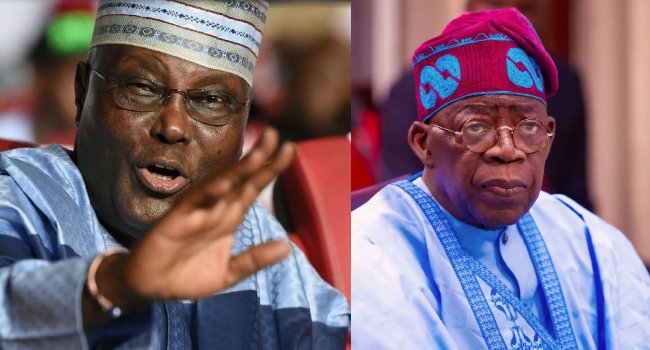
The debate over Nigeria’s petrol subsidy is emerging as another major political issue ahead of the 2027 presidential election, with the ruling All Progressives Congress (APC) opposing former Vice President Atiku Abubakar’s proposal to bring back the policy.
The APC argues that restoring the subsidy could reverse what it describes as important fiscal gains achieved since President Bola Tinubu ended the programme in 2023.
The party made its position known during a policy roundtable organised by the APC Professionals Forum in Abuja.

Representing President Tinubu at the event, APC National Chairman Prof. Nentawe Yilwatda said the government inherited an economy under considerable pressure.
He said the country was dealing with problems including fuel subsidy distortions, foreign exchange shortages, weak revenue mobilisation, multiple exchange-rate systems and rising debt-servicing costs.
According to Yilwatda, the administration chose to undertake difficult reforms rather than continue with what it considered an unsustainable economic structure.
He said the results being cited by the government include an increase in external reserves to about $52.7 billion as of August 2026.
The APC chairman also reported growth in non-oil revenue, saying collections increased from approximately N13.63 trillion in 2023 to N16.4 trillion in the first two quarters of 2026.
He further said Nigeria’s merchandise trade surplus had expanded substantially, while the economy recorded 4.43 per cent real GDP growth in the second quarter.
Inflation, he added, had declined to about 15.4 per cent.
For the APC, these figures support its argument that the reforms are beginning to strengthen the country’s economic foundation.
The party says the savings and additional fiscal space created by subsidy removal can be used to finance infrastructure and other sectors needed to expand the economy.
Dr Isa Yuguda, a former Bauchi State governor and chairman of the APC Professionals Forum’s Board of Trustees, also spoke strongly against returning to the old subsidy arrangement.
Yuguda recalled his involvement with the Fuel Subsidy Task Force in 2009 and said the committee had identified alleged weaknesses and leakages in the subsidy system.
He argued that government resources previously used to support the programme could instead be invested in areas such as health, education, agriculture, security and infrastructure.
Yuguda claimed that more than N15 trillion had been saved through the removal of the subsidy and warned that reversing the policy could recreate some of the financial problems associated with the previous system.
However, the subsidy debate remains contentious.
Supporters of restoration argue that cheaper petrol could provide immediate relief to Nigerians struggling with high transportation and living costs. The APC, on the other hand, maintains that the long-term cost of maintaining the subsidy would outweigh its short-term benefits.
With the 2027 election approaching, Nigerians are likely to hear competing proposals from political parties on fuel pricing, economic reform and the management of public resources.
For the Tinubu administration, the strongest argument in favour of subsidy removal will ultimately depend on whether the claimed fiscal gains produce visible improvements in employment, infrastructure, purchasing power and the overall cost of living.