



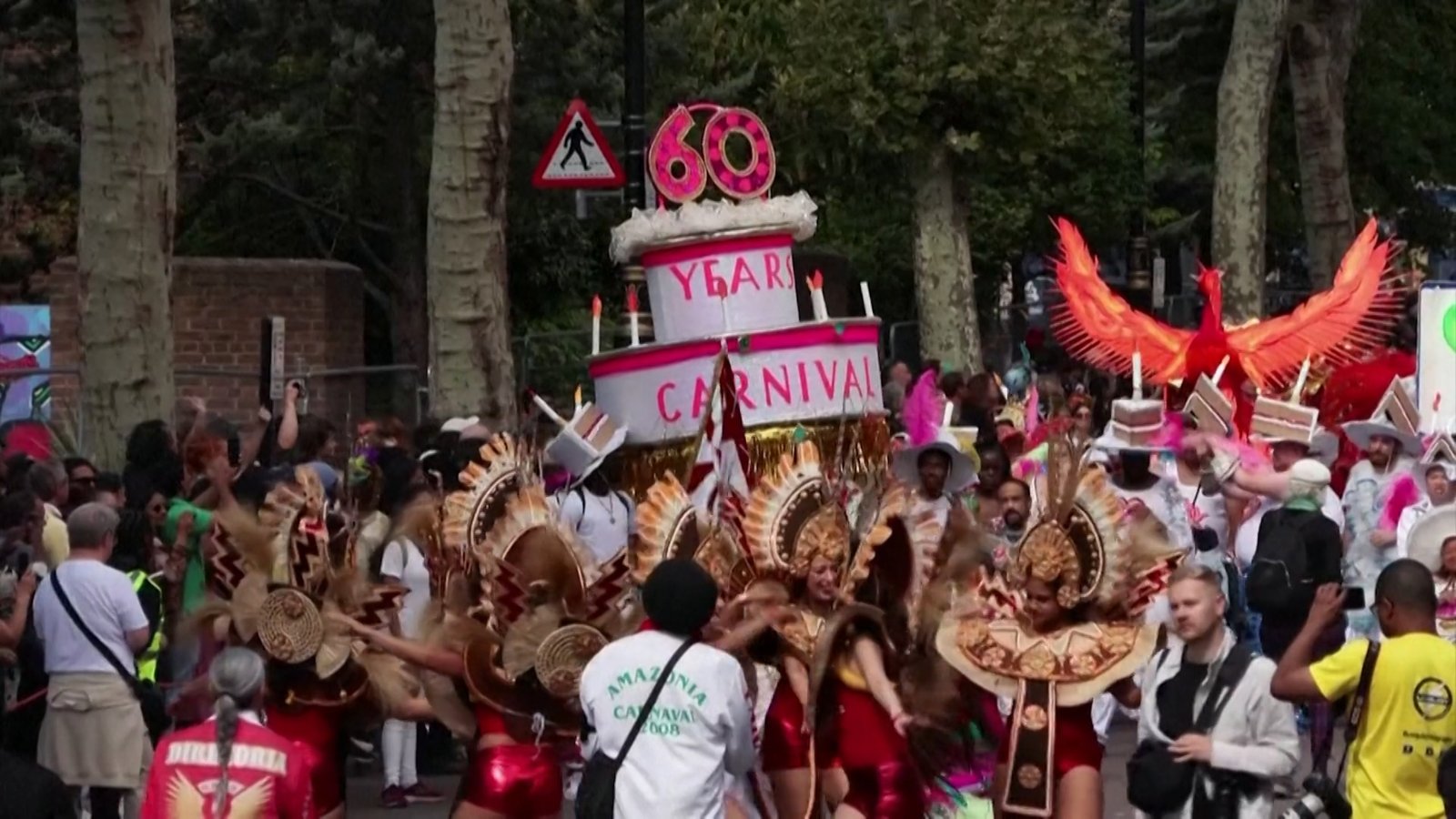
Sixty years after its modern street celebration began, Notting Hill Carnival continues to bring the sounds, colours and traditions of the Caribbean to the heart of London.
The annual event is taking place during the August Bank Holiday weekend, with Londoners and visitors filling the streets to enjoy music, dancing, elaborate costumes and Caribbean food.
But behind the celebration is a history shaped by migration, racial tension, community activism and the determination of Caribbean communities to preserve and share their culture.

A Festival Born From Difficult Times
The foundations of Notting Hill Carnival were laid during a period when Caribbean immigrants in London faced widespread discrimination and hostility.
In the late 1950s, racial tensions were particularly serious in Notting Hill.
Against that background, Trinidadian activist Claudia Jones helped create an important cultural space for Caribbean people in Britain.
Her indoor Caribbean Carnival in 1959 brought Caribbean music and culture to a London audience and helped establish a tradition of cultural celebration.
The Beginning of the Modern Carnival
The event that eventually developed into today’s Notting Hill Carnival came in 1966.
Local social worker Rhaune Laslett organised a street festival in the Notting Hill area, bringing entertainment and community activities into the streets.
That celebration is generally recognised as the starting point of the modern carnival.
Over the years, the event expanded dramatically, attracting performers, musicians, masquerade groups and sound systems from across London and beyond.
More Than Music and Colour
Notting Hill Carnival has become synonymous with Caribbean cultural expression.
Soca and calypso provide much of the soundtrack, while steelpan music, elaborate costumes and sound-system culture remain central to the experience.
The festival also represents the influence of Caribbean communities on British society.
For generations of Londoners, the carnival has provided an opportunity to celebrate identity, heritage and community while inviting people from different backgrounds to participate.
A Milestone Anniversary
The 60th anniversary is therefore more than another year on the carnival calendar.
It is an opportunity to reflect on how a relatively small community celebration evolved into one of Europe’s biggest street festivals.
Its journey mirrors the wider story of Caribbean migration to Britain and the lasting influence of Caribbean communities on London’s culture.
As thousands once again gather in Notting Hill, the carnival continues to demonstrate how music and culture can bring people together while preserving the history of the communities that created it.
Six decades on, the celebration remains firmly rooted in its original spirit of community, cultural pride and expression.