



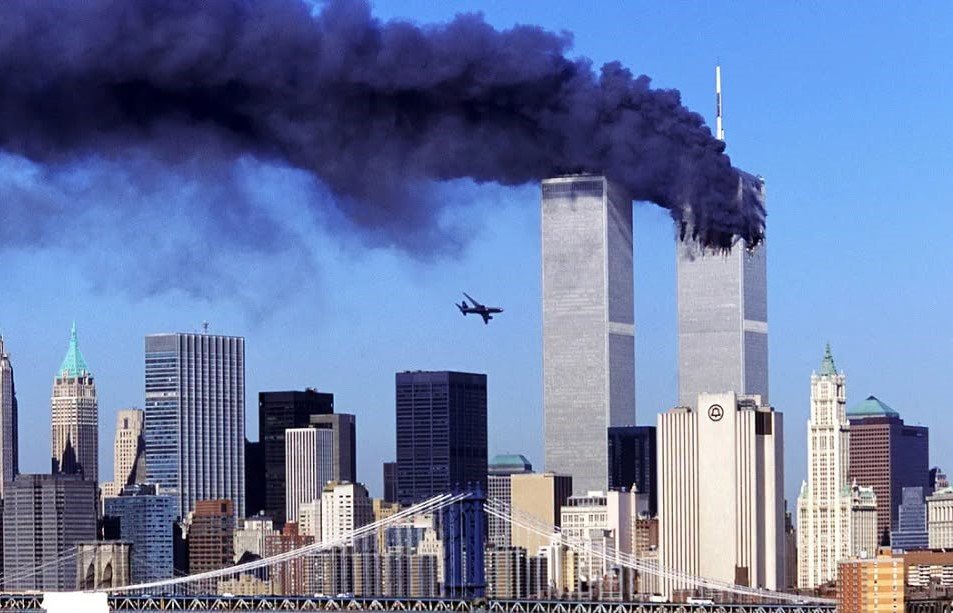
Twenty-five years after the September 11, 2001 terrorist attacks, governments and intelligence agencies continue to examine one of the biggest security failures in modern history: how warnings about al-Qaeda existed before the attacks, yet were not brought together quickly enough to prevent the tragedy.
The attacks, which claimed the lives of 2,977 people, transformed global security policy and shaped the foreign, military and intelligence strategies of the United States and its allies for decades.
On that morning, four hijacked passenger planes were used in a coordinated terrorist operation. Two aircraft struck the World Trade Center towers in New York, while another crashed into the Pentagon. A fourth plane came down in Pennsylvania after passengers attempted to regain control of the aircraft.

The scale of the attack shocked the world and prompted the administration of then-President George W. Bush to launch what became known as the “War on Terror.”
But investigations that followed revealed that the warning signs had existed long before the attacks.
Warnings that were not connected
US intelligence agencies had been tracking al-Qaeda and its leader, Osama bin Laden, for years. The CIA had even established a dedicated unit focused on locating and monitoring him.
However, intelligence held by different agencies was not effectively combined. Information available to the CIA and FBI was not sufficiently shared or acted upon, contributing to what the 9/11 Commission later described as failures of imagination, policy, capability and management.
The central lesson was not simply that intelligence agencies lacked information. Rather, they struggled to connect separate pieces of information and understand what they meant collectively.
That failure has since led to major changes in the way intelligence and counter-terrorism agencies cooperate.
Intelligence agencies transformed
In the United States, the post-9/11 period brought a major restructuring of the intelligence system.
The National Counterterrorism Center was established, while the position of Director of National Intelligence was created to improve coordination among the country’s numerous intelligence agencies.
International cooperation also expanded. The Five Eyes intelligence alliance involving the United States, United Kingdom, Canada, Australia and New Zealand became an important part of Western intelligence-sharing efforts.
The relationship between the CIA and Britain’s Secret Intelligence Service, MI6, has also remained particularly close.
Britain similarly strengthened cooperation between intelligence officers and law-enforcement agencies. Counter-terrorism structures increasingly brought together intelligence specialists, police officers, analysts and international partners so that information could be assessed and acted upon more quickly.
Iraq exposed another dangerous weakness
Yet the years following 9/11 demonstrated that better information-sharing alone could not eliminate intelligence failures.
The 2003 invasion of Iraq became a major example.
The British government and its intelligence services faced intense pressure to establish whether Saddam Hussein’s regime possessed weapons of mass destruction.
Intelligence provided to the government was subsequently found to have been seriously flawed, with the Butler Review concluding that assessments had relied heavily on unverified information.
Iraq’s WMD programme became one of the most damaging intelligence controversies in modern British history.
The experience prompted significant changes within MI6, including greater separation between intelligence officers collecting information from sources and teams responsible for assessing and challenging that information.
The objective was to prevent assumptions or political expectations from influencing the interpretation of raw intelligence.
Have governments really learned?
General Sir Richard Shirreff, who served in Iraq, has questioned how effectively governments learn from strategic mistakes.
His criticism reflects a broader problem faced by intelligence agencies: even when information is available, decision-makers must correctly interpret it, challenge assumptions and understand the possible consequences of their actions.
Lord Jonathan Evans, who served as MI5 director-general from 2007 to 2013, has also described how the terrorist threat associated with al-Qaeda became Britain’s overriding security concern after 9/11.
The following years brought numerous counter-terrorism successes, including disrupted plots, arrests and prosecutions.
But there were also continuing failures.
The enduring lesson of 9/11
The legacy of September 11 is therefore more complicated than simply a story of intelligence agencies becoming better at preventing terrorism.
The attacks demonstrated the consequences of fragmented information, institutional rivalry and failures to imagine how seemingly separate warning signs could form part of a much larger threat.
The wars and security policies that followed also showed that intelligence can be distorted when political leaders become committed to a particular conclusion.
Twenty-five years later, intelligence agencies have more sophisticated technology, stronger international partnerships and significantly greater mechanisms for sharing information.
Yet the fundamental challenge remains the same: collecting information is only the beginning.
Governments must be able to recognise what matters, challenge assumptions, connect the dots and make sound strategic decisions before a warning becomes a catastrophe.
That may ultimately be the most enduring lesson of 9/11.