


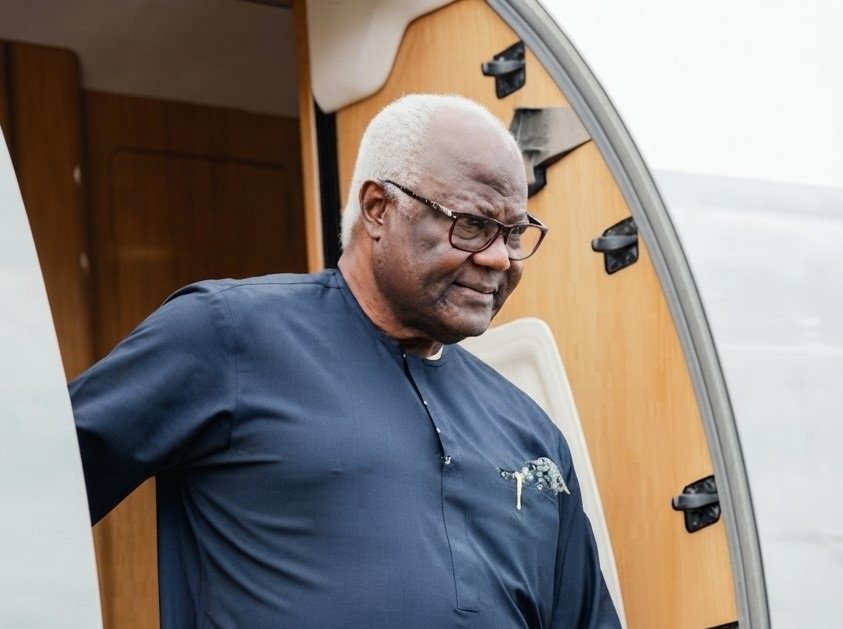
The return of former Sierra Leone President Ernest Bai Koroma to Freetown has ended a prolonged period of political uncertainty surrounding his stay in Nigeria and placed regional diplomacy in the spotlight.
Koroma arrived back in Sierra Leone after spending almost two years in Abuja, where he had been based following political upheaval in his home country.
His return was facilitated with the involvement of the Nigerian government and the Economic Community of West African States (ECOWAS).

Foreign Affairs Minister Bianca Odumegwu-Ojukwu accompanied Koroma from Abuja, acting on the directive of President Bola Tinubu.
Former Nigerian leaders Goodluck Jonathan and Olusegun Obasanjo were also reported to have played roles in the diplomatic process.
For Nigeria, the development represents an opportunity to demonstrate that regional influence does not depend solely on military or economic power, but can also be exercised through negotiation, mediation and confidence-building.
From Political Crisis to Homecoming
The circumstances that led to Koroma’s relocation to Nigeria can be traced to the political crisis that followed an armed uprising in Sierra Leone in November 2023.
The uprising targeted military installations and was followed by legal action against Koroma, including treason-related allegations.
Koroma rejected the allegations.
Rather than allowing the dispute to escalate further, regional actors became involved in efforts aimed at creating a pathway towards a peaceful resolution.
The legal proceedings against the former president were subsequently discontinued, according to the information surrounding his return, paving the way for him to go back to Sierra Leone.
Why the Return Matters
Koroma’s homecoming comes at a sensitive period for West Africa, where democratic institutions have faced considerable pressure from political disputes and unconstitutional changes of government.
The episode demonstrates the potential value of quiet diplomacy when political tensions involve former heads of state and competing political interests.
Nigeria’s role is particularly significant given its longstanding influence within ECOWAS and its history of involvement in regional peace and security initiatives.
However, the real measure of the development will be what happens after Koroma’s return.
Sierra Leone still needs to address political divisions and strengthen confidence in its democratic institutions.
The government of President Julius Maada Bio, opposition parties and other stakeholders will need to ensure that the former president’s return contributes to reconciliation rather than reopening old political disputes.
For ECOWAS, meanwhile, the episode offers an important reminder that regional diplomacy remains a valuable tool for preventing political disagreements from becoming prolonged sources of instability.
Koroma’s journey from Freetown to Abuja and back again may therefore be remembered not simply as a personal return home, but as a significant case study in West African political mediation.