


Nigeria’s maritime industry is being positioned for a larger role in the country’s economy, with the Federal Government highlighting new policies, increased revenue and improvements across key areas of the sector.
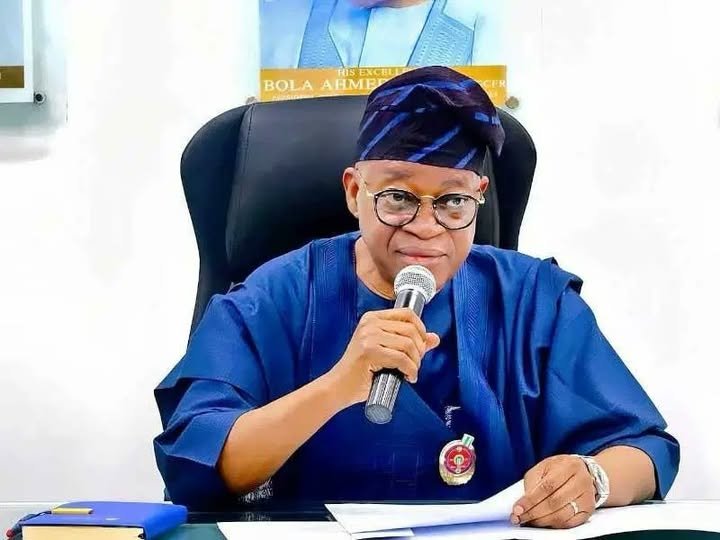
Minister of Marine and Blue Economy, Adegboyega Oyetola, gave the assessment while reviewing the ministry’s performance since its establishment in August 2023.
He said the creation of a dedicated ministry for the marine and blue economy had provided greater focus to an area with significant potential for Nigeria’s economic development.

One of the strongest indicators cited by the minister was the increase in revenue generated by agencies under the ministry.
Oyetola said the agencies recorded ₦1.83 trillion in revenue in 2025, compared with ₦700.79 billion in 2023. He linked the improvement to reforms aimed at strengthening revenue collection, reducing leakages and increasing the use of digital systems.
Beyond revenue, the ministry’s scorecard covered developments in port infrastructure, maritime regulation, security, shipping, fisheries and the development of skilled manpower.
The minister also pointed to inland-waterway safety as an important part of the government’s broader maritime strategy.
A major policy milestone came in May 2025 when the Federal Government approved Nigeria’s first National Policy on Marine and Blue Economy.
The policy seeks to provide a common direction for several maritime-related industries, including shipping, fisheries, offshore energy, marine biotechnology and other emerging opportunities.
Oyetola said Nigeria’s extensive marine assets provide the country with an opportunity to diversify its economy and create new sources of employment.
He highlighted the country’s 853-kilometre coastline and extensive inland waterways as strategic assets that could support increased trade, investment and commercial activity.
According to the minister, the long-term objective is to move beyond dependence on traditional sources of government revenue by developing businesses and industries around Nigeria’s marine resources.
He maintained that the progress achieved during the past three years represents only the foundation of what could become a much larger economic transformation.
For the sector to reach its full potential, however, Oyetola stressed the importance of maintaining policy consistency while attracting investment and developing the infrastructure required to support maritime businesses.
The government’s strategy places the marine and blue economy among the sectors expected to contribute to Nigeria’s future economic expansion, particularly through shipping, logistics, fisheries, energy, investment and employment.