



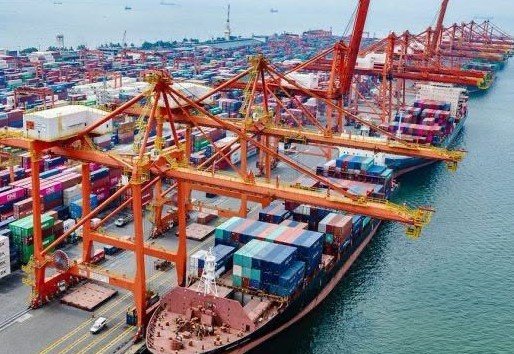
Nigeria’s reliance on China as its major source of imported goods has increased significantly, with Chinese products accounting for N11.01 trillion of the country’s N28.04 trillion import bill in the first six months of 2026.
The latest figures from the National Bureau of Statistics indicate that China accounted for 39.27 per cent of all goods imported into Nigeria between January and June 2026.
The data shows that Nigeria imported N5.10 trillion worth of goods from China in the first quarter before the figure increased to N5.92 trillion in the second quarter.

China’s H1 import value was N1.39 trillion higher than the N9.62 trillion recorded during the same period in 2025, representing a 14.49 per cent increase.
The development is notable because Nigeria’s overall import bill declined during the period.
According to the NBS data, total imports fell from N33.14 trillion in the first half of 2025 to N28.04 trillion in H1 2026, representing a 15.37 per cent reduction.
Despite the fall in total imports, China’s share increased from 29.03 per cent to 39.27 per cent.
This means that China not only remained Nigeria’s biggest source of imported goods but significantly widened its lead over other major trading partners.
During Q1 2026, Chinese imports accounted for 37.42 per cent of Nigeria’s N13.62 trillion total imports.
The United States came second with N2.81 trillion, while India recorded N992.87 billion.
The gap widened further in Q2, when Nigeria imported N5.92 trillion worth of goods from China. The amount represented 41.02 per cent of the country’s total imports of N14.42 trillion during the quarter.
The United States supplied N1.01 trillion, while India accounted for N924.46 billion. Imports from the Netherlands stood at N409.81 billion, with Germany recording N395.87 billion.
On a year-on-year basis, China’s Q2 exports to Nigeria increased by N955.58 billion, or 19.26 per cent, compared with N4.96 trillion in Q2 2025.
The figures mean that China supplied almost six times the value of goods imported from the United States during the second quarter.
However, the growing trade volume has emerged alongside concerns over the quality and authenticity of some imported products.
Consumer concerns over alleged counterfeit and substandard goods have intensified, with several social media discussions focusing on products such as toothpaste, skincare products, bottled water and yoghurt drinks.
NAFDAC has also raised concerns over what it described as emerging counterfeit networks involving some Chinese operators in Nigeria.
The agency’s Director of Investigation and Enforcement, Martins Iluyomade, previously disclosed that NAFDAC had identified a new trend involving some Chinese counterfeiters allegedly operating within the country.
The development highlights the scale of Nigeria-China trade while also placing greater attention on the need for effective product regulation, border controls and consumer protection.
With China now accounting for almost four out of every 10 naira spent on imported goods, developments in the trade relationship are likely to remain significant for Nigeria’s economy, local manufacturers and consumers.