


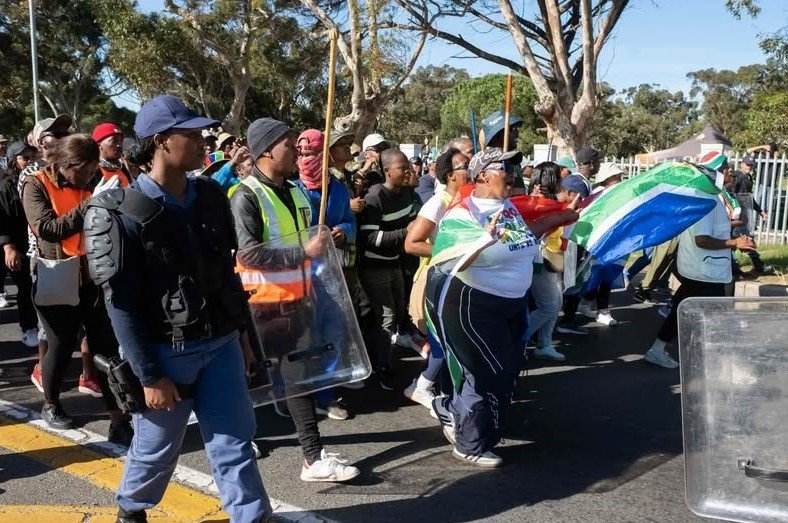
A protest movement in South Africa has set September 30 as a deadline for undocumented migrants to leave the country, raising fears of renewed mass demonstrations in Durban.
The campaign has been marked by weekly protests in the city, with organisers now calling for a larger mobilisation later this month.
Sphelele Shinga, a leader of the March and March movement, said communities were preparing for the next major protest and claimed that participation could reach 1.5 million people.

According to Shinga, the protesters believe they are defending their communities and country by demanding tougher action against undocumented migrants.
“You should know that all the communities are gathering up again,” he said, adding that people were “standing up for their home” and their country.
Shinga said the movement would use the September 30 action to press its demand for undocumented migrants to leave South Africa.
However, the protests have also generated concerns about the welfare and safety of migrants and refugees caught up in the situation.
Princess Adjei, a Ghanaian refugee, said some people had been forced to sleep on the streets and could not remain there indefinitely.
“We can’t keep sleeping on the streets forever as well. People have died because of sleeping on the street,” Adjei said.
She explained that affected refugees were awaiting buses while their immigration documents were being checked and verified.
Peace activists have meanwhile joined efforts to support the refugees, with Ela Gandhi, granddaughter of the late Indian independence leader Mahatma Gandhi and a former South African parliamentarian, speaking against anti-migrant rhetoric.
Gandhi rejected claims that migrants were responsible for the problems cited by protesters.
“The rhetoric that these people are using is completely untrue,” she said. “It’s not the migrants that are causing the problems that they talk about.”
The planned September 30 demonstration could therefore become a significant test for authorities in Durban, particularly if large numbers of protesters participate as organisers have predicted.
Authorities and civil society groups are expected to remain concerned about maintaining public order while protecting the rights and safety of migrants and refugees.