



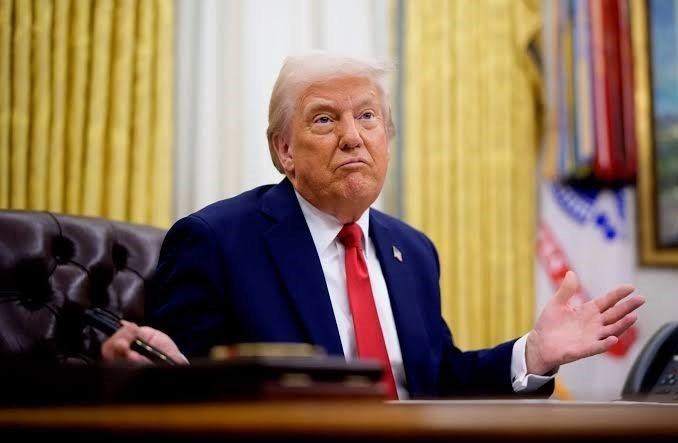
US President Donald Trump has accused Canada of wanting the perks of being part of the United States without officially becoming a state, as trade tensions between the nations escalate after trade talks collapsed.
His remarks came after negotiations between Washington and Ottawa failed late Friday, leading to new 50% US tariffs on a variety of Canadian goods.
“Canada wants the benefits of a State, without being one,” said Trump, reiterating his longstanding comments about Canada potentially being the **51st US state**.

Carney Labels Tariffs as a ‘Mistake’
Canadian Prime Minister Mark Carney fiercely opposed the US stance, describing the new tariffs as a “mistake” aimed at damaging and dividing Canada.
Carney announced that Canada would counteract by matching the US tariffs dollar-for-dollar” starting September 8, impacting products like steel, dairy, appliances, and electronics.
He characterized the situation as a trade war.
“They demanded too much and offered too little,” Carney stated. “Being attacked puts you at war, and we have been attacked.”
Later, in a Fox News interview, Trump criticized Canada’s decision to retaliate, calling Canadians “foolish” for entering a trade war with the US while thinking they could prevail.
Breakdown of Trade Negotiations
Both countries had seemed hopeful about reaching an agreement earlier in the week, but negotiations eventually broke down with each side blaming the other for last-minute changes to the proposed terms.
Carney asserted that Canada could not accept US demands.
“We cannot accept what they’ve offered, and we will not concede to what they’ve asked,” he stated.
This collapse threatens to disrupt one of the world’s most integrated trading relationships, raising costs and uncertainty for businesses on both sides.
Implementation of New US Tariffs
The upcoming 50% tariffs will affect a range of Canadian products, in addition to existing US duties on Canadian steel, aluminum, automobiles, and lumber.
While relatively limited in scope, these new measures apply to around **$20 billion (C$28 billion)** worth of Canadian imports, representing roughly 5% of Canada’s exports to the United States.
Among affected items are **wine, dairy products, cement, clothing, and hockey equipment**.
Carney remarked that Canada’s retaliation is reluctant but necessary to protect its economic interests, with further details expected soon.
Broader Economic Implications
Tariffs have become a major facet of Trump’s trade strategy, with him arguing that tariffs can bolster domestic manufacturing and safeguard American jobs.
Critics argue that tariffs can hike consumer and business costs while disrupting global trade.
With negotiations on hold and both countries gearing up for retaliatory actions, businesses and consumers on both sides of the border face increasing uncertainty regarding the future of US-Canada trade relations.