


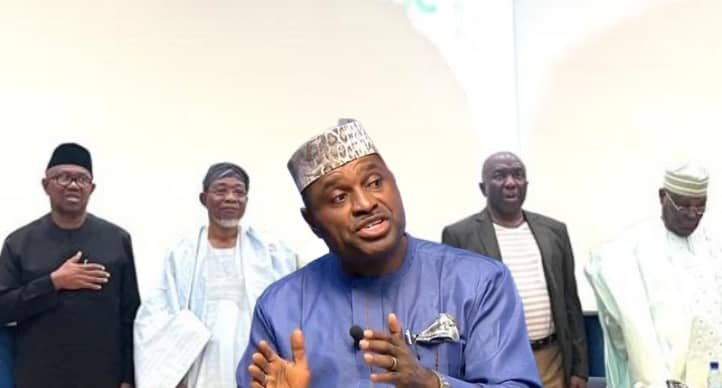
Kenneth Okonkwo, who serves as the spokesperson for the African Democratic Congress (ADC) presidential candidate, Atiku Abubakar, has voiced criticism against the Federal Government’s decision to remove the petrol subsidy. He contends that this move has exacerbated economic difficulties and diminished the naira’s purchasing power.
During a segment on Channels Television’s Sunday Politics, Okonkwo supported Atiku’s plan to make petrol more affordable if elected president in 2027. He called the subsidy removal a poor decision, stating it hasn’t delivered tangible benefits to everyday Nigerians, despite claims from the Federal Government that it has allowed for resource reallocation towards development.
Okonkwo highlighted the increased pressure on Nigerians, pointing out that petrol is now priced at about N1,300 per litre. This has elevated transportation costs and made basic necessities harder to afford for families and businesses.

He illustrated the hardship by comparing the cost of filling a 100-litre fuel tank with the national minimum wage. According to Okonkwo, N130,000 significantly exceeds the minimum wage, making it challenging for someone earning N70,000 monthly to cover even basic expenses.
He stated that a Nigerian earning N70,000 could spend nearly all of that on fuel alone, leaving little to nothing for rent, food, healthcare, or other needs.
In defending Atiku’s stance, Okonkwo emphasized that Atiku would work towards making petrol more affordable while tackling broader economic issues impacting Nigerians. He suggested that the government should introduce policies that alleviate financial strain on households and businesses instead of actions that raise living costs.
The ADC spokesperson further linked rising petrol prices to increased transportation costs, affecting not just motorists but also food prices, production expenses, logistics, and household budgets.
The debate over the fuel subsidy continues to be a defining economic issue under the Tinubu administration. The Federal Government argues that ending the subsidy was necessary to lighten the fiscal load on the state and channel resources into infrastructure and development projects.
However, critics assert that the sudden rise in fuel prices and cost of living have imposed significant hardship on Nigerians, particularly those with lower incomes. As the 2027 presidential election nears, discussions around fuel prices, inflation, purchasing power, and economic reforms are expected to dominate political discourse.
Okonkwo’s statements contribute to the growing criticism from opposition parties regarding the government’s economic strategies and highlight the alternative proposals being put forward in anticipation of the upcoming election.