


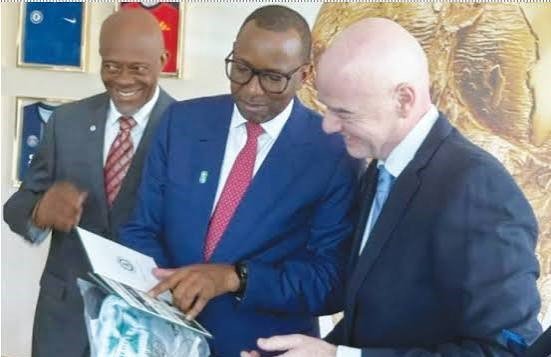
FIFA could appoint a normalisation committee to oversee reforms within the Nigeria Football Federation (NFF) following the resignation of the federation’s leadership, according to National Sports Commission Chairman Shehu Dikko.
Dikko spoke after Nigerian officials held discussions with FIFA and CAF representatives in Switzerland on Friday.
The talks focused on the leadership vacuum created by the mass resignation of the NFF president, General Secretary and other members of the federation’s executive leadership.

Government presents reform plan
Dikko said the Nigerian government used the meeting to present its proposed roadmap for restructuring football administration.
He said the government believes a broad reform is necessary to address concerns that have existed within Nigerian football administration for many years.
According to him, FIFA agreed with the need for reforms but insisted that any changes must follow the applicable football statutes and established procedures.
FIFA had earlier accepted the resignations of the NFF’s principal officers and said it would continue discussions with the Nigerian government, the NFF administration and CAF on a roadmap for reforms.
What would the normalisation committee do?
Dikko explained that a normalisation committee would be a FIFA-appointed body with a specific mandate.
Its responsibilities would include overseeing agreed reforms and helping establish the conditions for a new NFF administration.
The NSC chairman said the committee could remain in place for between six months and one year, depending on the scope of the reforms and the final agreement reached with football stakeholders.
He added that the members would be expected to operate independently and should not have interests in contesting the subsequent NFF elections.
FIFA has not formally announced committee
While Dikko said FIFA could establish the committee, the latest reports indicate that the final structure and process remain subject to consultations.
Earlier FIFA and CAF engagements produced different positions among Nigerian football stakeholders. Some state football association leaders argued that the existing NFF Congress could resolve the leadership situation, while other stakeholders supported a normalisation committee.
The reform discussions therefore remain focused on determining the appropriate transition arrangement and the framework for future NFF elections.
The development follows growing scrutiny of Nigerian football administration and the performances of the country’s national teams.