



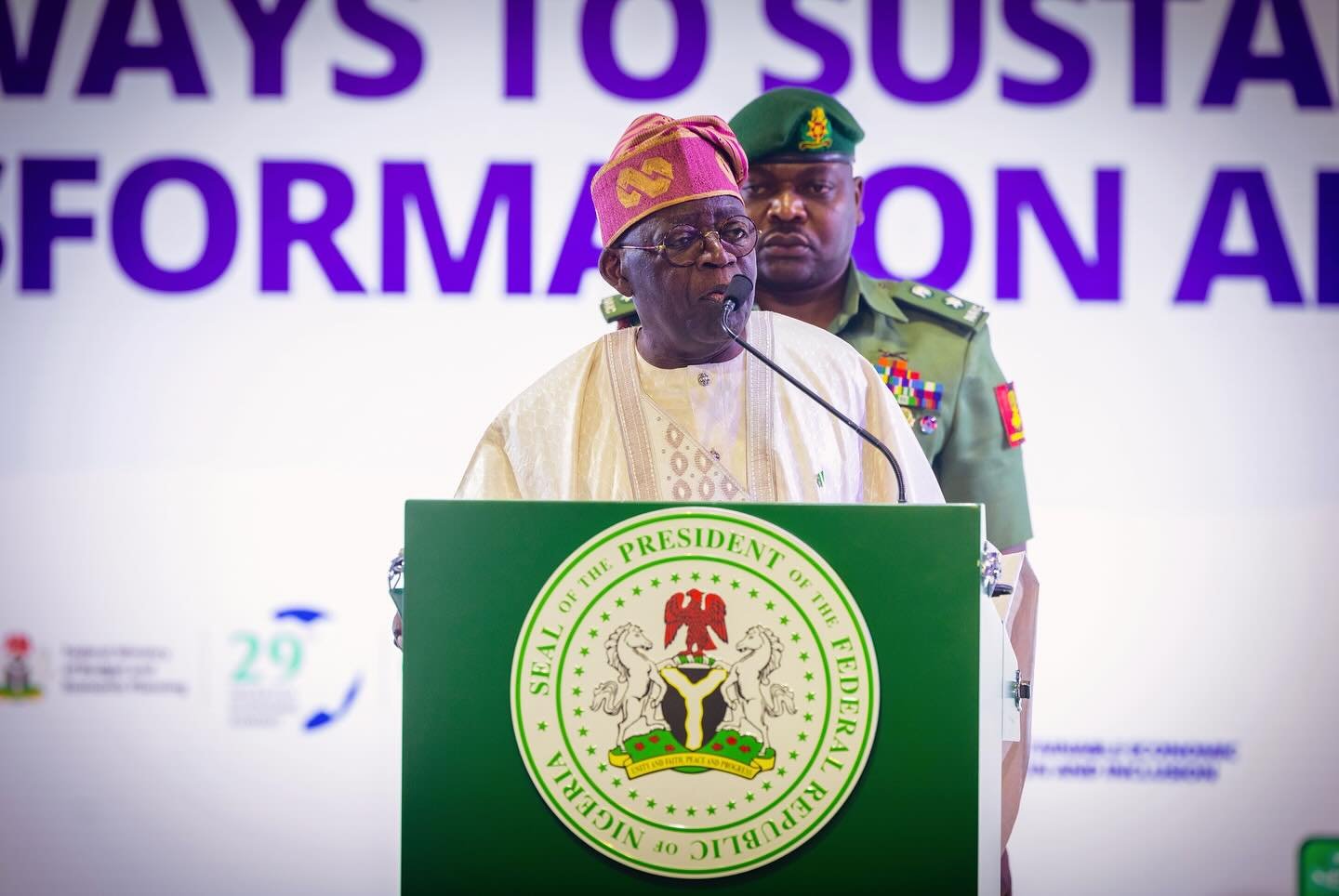
President Bola Tinubu has directed the Economic and Financial Crimes Commission (EFCC) to take immediate steps to lift the court-backed restriction placed on an Osun State Government bank account.
In a statement issued on Thursday, the President said his concern was not with the EFCC’s constitutional responsibility to investigate suspected financial crimes, but with the timing of the action, given the proximity of the Osun State governorship election.
Tinubu instructed the anti-graft agency to urgently approach the court to seek the reversal of the order freezing the account and suspend further action against the state government pending the outcome.

According to the President, decisions taken by federal agencies are often viewed as actions of his administration, regardless of whether he was consulted beforehand.
He reiterated that since assuming office in May 2023, he has consistently allowed anti-corruption agencies and law enforcement institutions to carry out their statutory responsibilities independently, without political interference.
Tinubu stressed that he has deliberately refrained from influencing the operations of the EFCC and other investigative agencies because strong democratic institutions are essential to the rule of law and good governance.
While noting that he had not been fully briefed on the details of the investigation, the President maintained that the timing of the account restriction could create the wrong public perception, especially as Osun prepares for a crucial governorship election.
He emphasised that nothing should be allowed to cast doubt on the Federal Government’s commitment to a free, fair and credible electoral process.
The controversy began after Osun State Governor Ademola Adeleke disclosed that the EFCC had frozen one of the state’s accounts used for the payment of workers’ salaries. He also alleged that the commission planned to freeze the accounts of some senior government officials.
Adeleke condemned the action, describing it as an attack on democratic governance and called on the EFCC leadership to explain the decision.
The EFCC, however, defended its action, stating that the restriction followed the discovery of suspicious financial transactions involving the affected account.
According to the commission, the temporary freeze was intended to prevent the possible diversion of public funds while investigations continue.
The agency insisted that its intervention was carried out in line with its legal mandate to safeguard public resources and that the existence of an election should not prevent it from performing its statutory duties.
The development has generated widespread political debate, with opposition figures questioning the timing of the EFCC’s action, while the commission maintains that its operations are guided solely by the law.